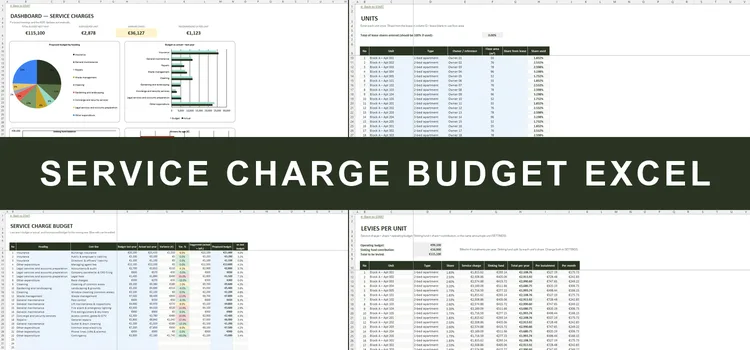
Service Charge Budget Excel
Budget, levies, arrears & sinking fund for OMCs
- Budget in the 9 categories of the MUD Act, vs actual
- Levy per unit from the lease share or floor area
- Arrears aged 0–30 / 31–60 / 61–90 / 90+ days
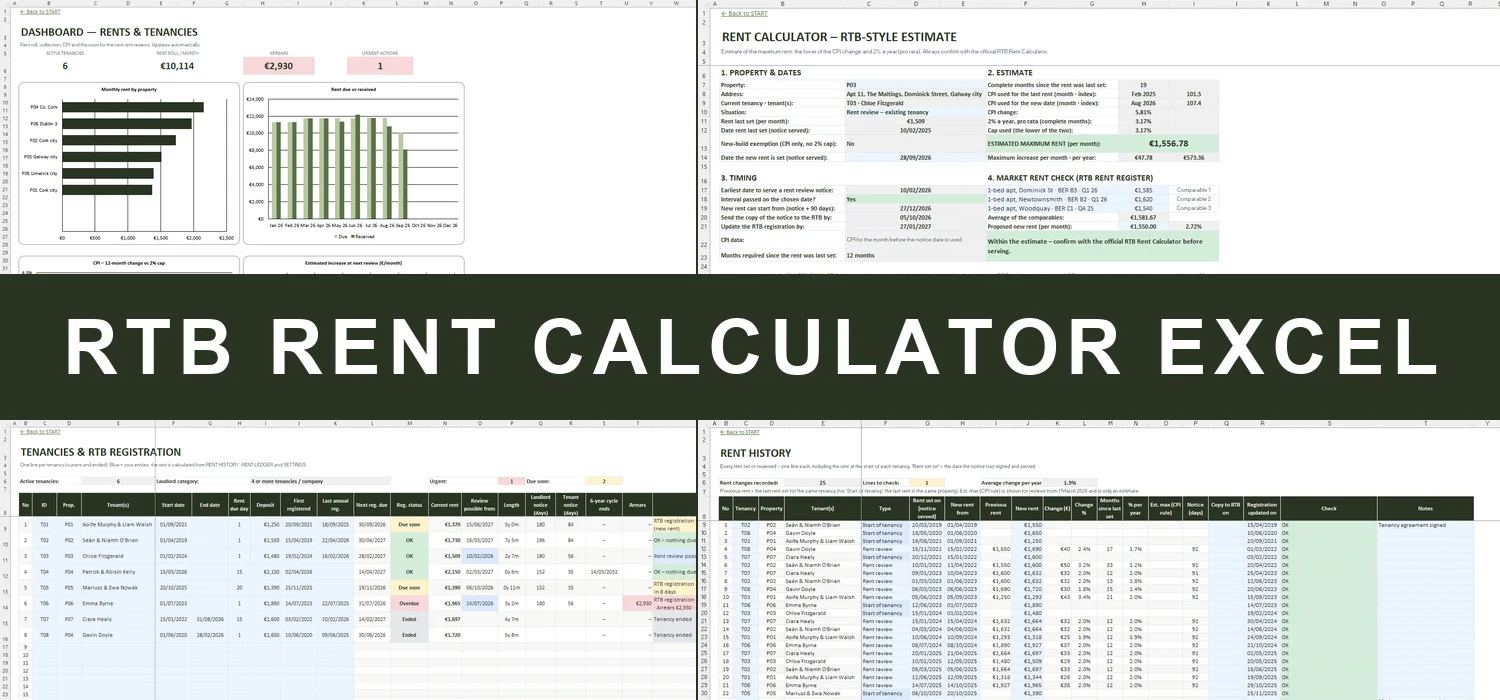
Rent review estimate, tenancy register & RTB deadlines for Irish landlords


Keep each property, tenancy and rent change in one place. The workbook estimates the next rent review under the CPI / 2% rule, tracks RTB registrations and notice periods, and shows who is behind with the rent.
A rent review in Ireland is more than a number. The rent can usually be reviewed once every 12 months, the notice has to reach the tenant at least 90 days before the new rent and must include three comparable rents from the RTB Rent Register, a copy goes to the RTB within 7 days, and the tenancy registration has to be updated afterwards – on top of the annual RTB registration of every tenancy. Since 1 March 2026 the cap is the lower of CPI inflation and 2% a year, nationwide – and if a tenancy already existed when its area became a rent pressure zone in June 2025, the first review can only come 24 months after the rent was last set.
Small landlords usually keep this in emails, the RTB portal and a notebook. This workbook brings it together: a register of properties and tenancies, the full rent history, an RTB-style estimate of the maximum rent for any property and date, a planner for all your next reviews, the notice periods that apply to each tenancy and a monthly rent ledger – with a next action for every tenancy. The official RTB Rent Calculator remains the one to attach to your notice.
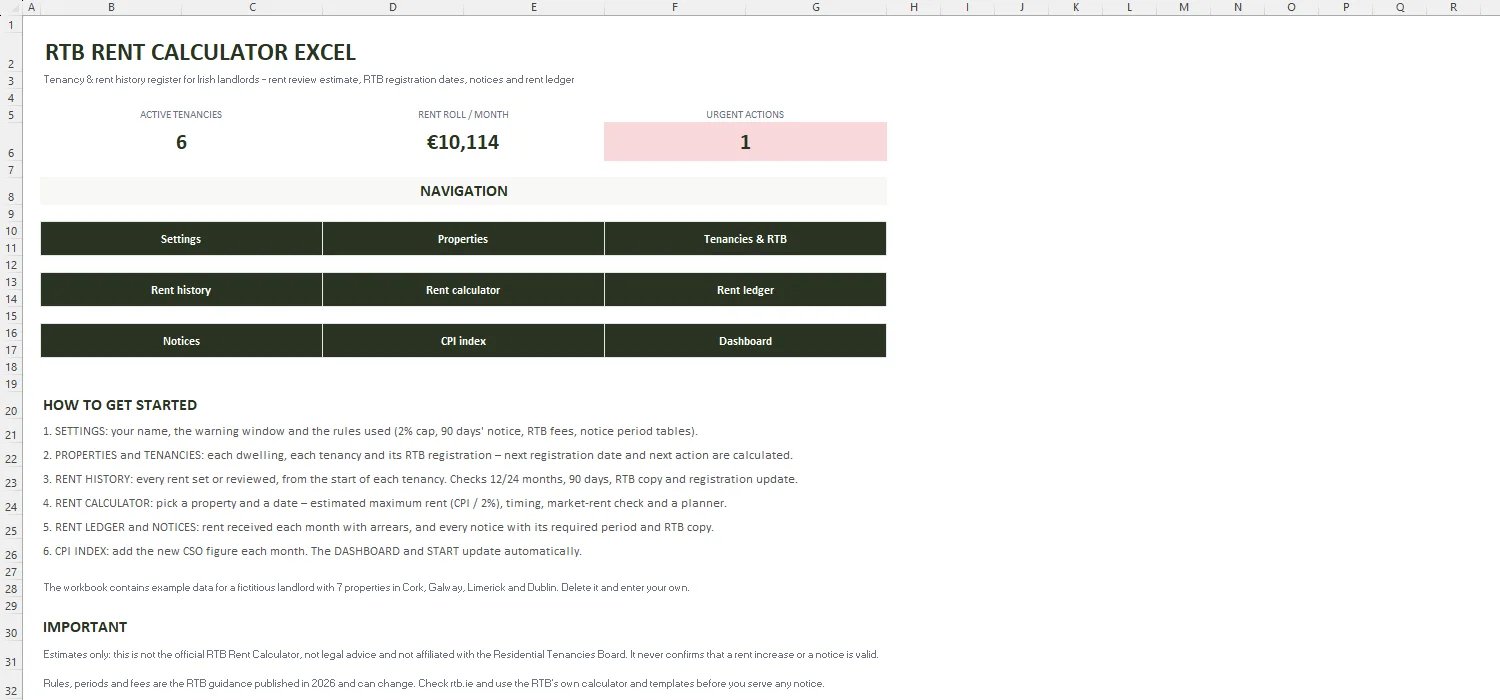
Key figures, quick links and a step-by-step guide.
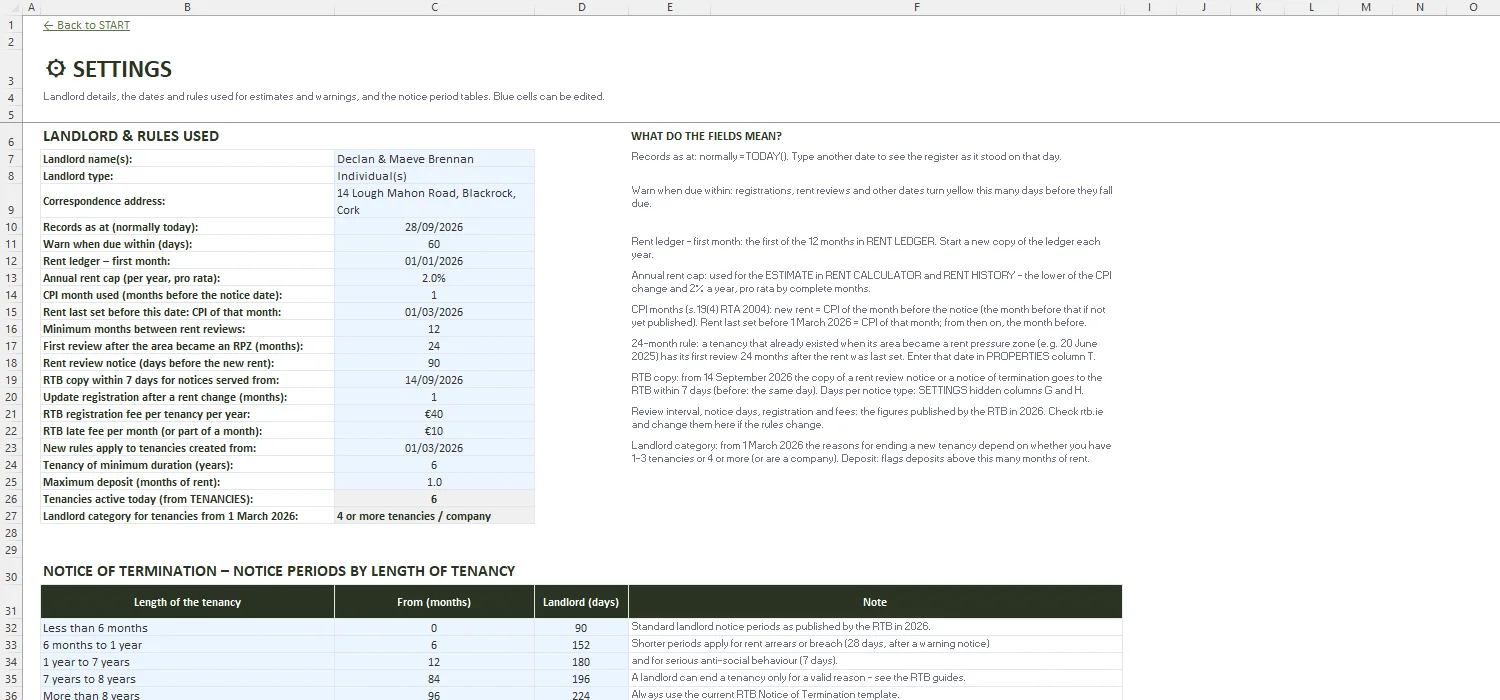
Landlord details, warning window, the 2% cap, 90-day notice, RTB fees, notice period tables and notice types.
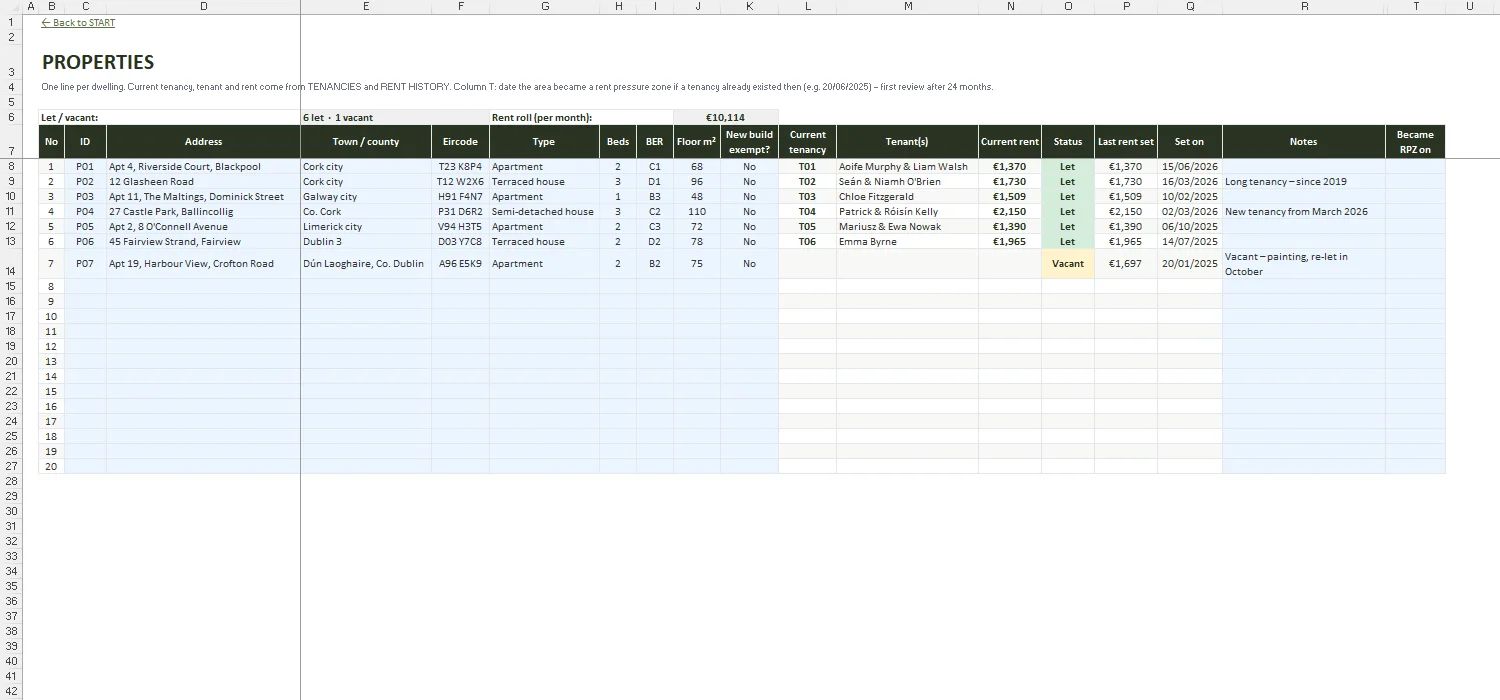
Up to 20 dwellings with Eircode, type, BER, new-build flag and the date the area became a rent pressure zone – current tenancy, tenant, rent and last rent set are filled in.
Tenants, dates, deposit, RTB registration and next renewal, current rent, review date, notice periods, arrears and next action.
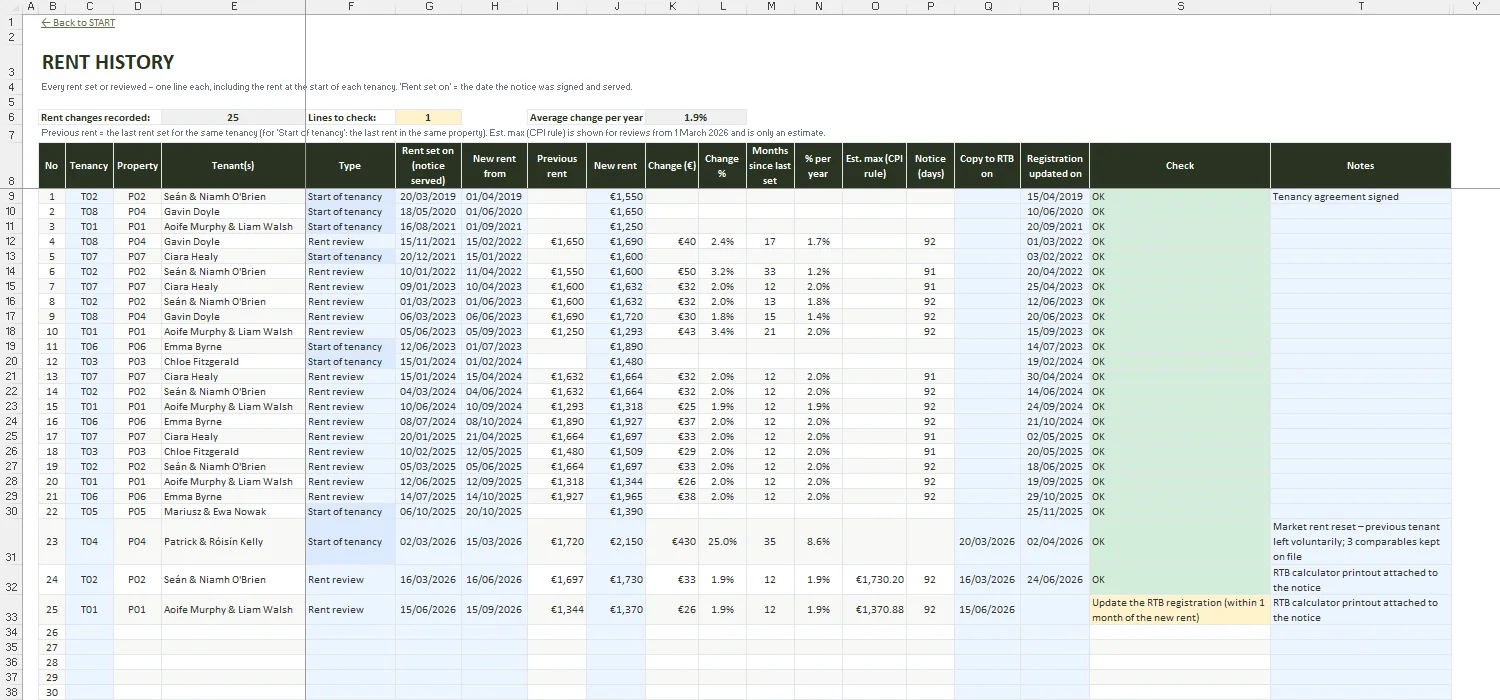
Every rent set or reviewed: previous rent, % change, months since last set, days of notice, RTB copy, registration update and checks.
RTB-style estimate for any property and date, timing checks, market-rent check with 3 comparables and a review planner.
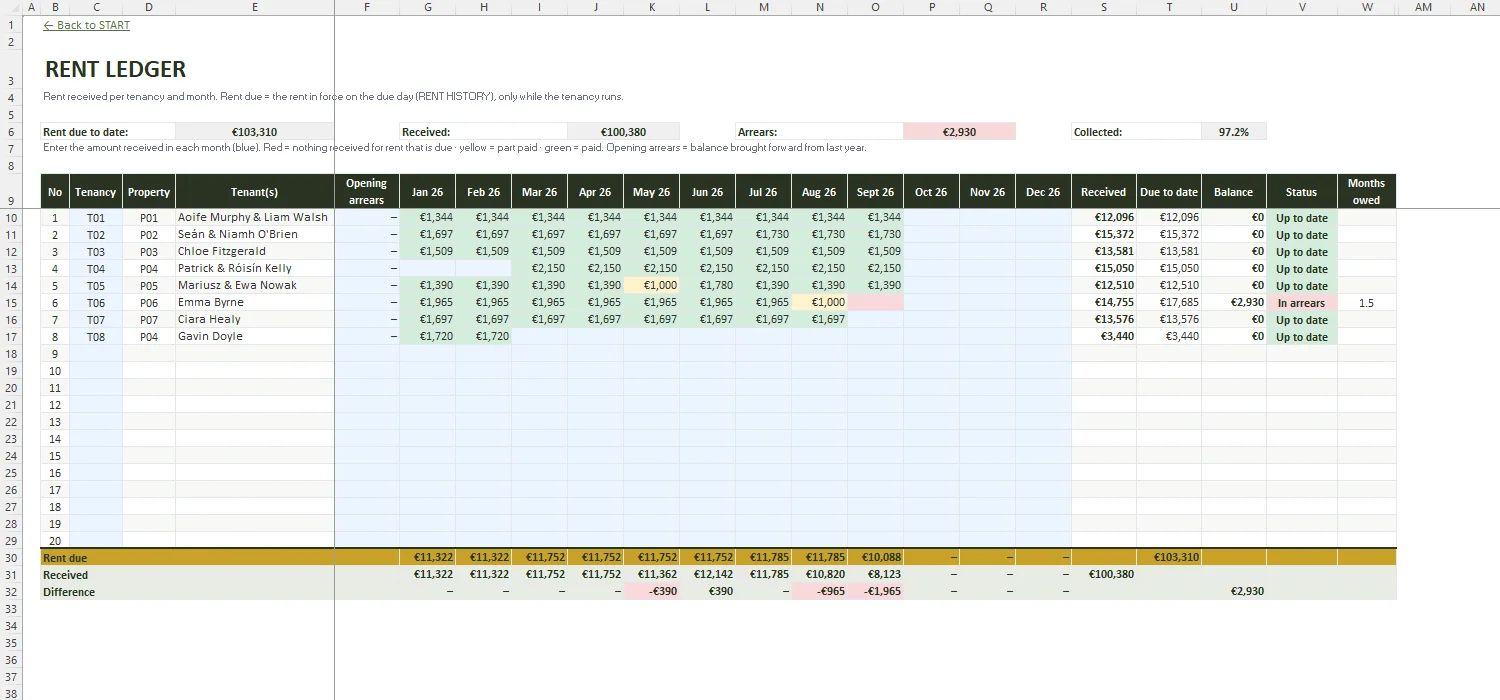
Rent received per tenancy for 12 months against the rent due, with balances and arrears.
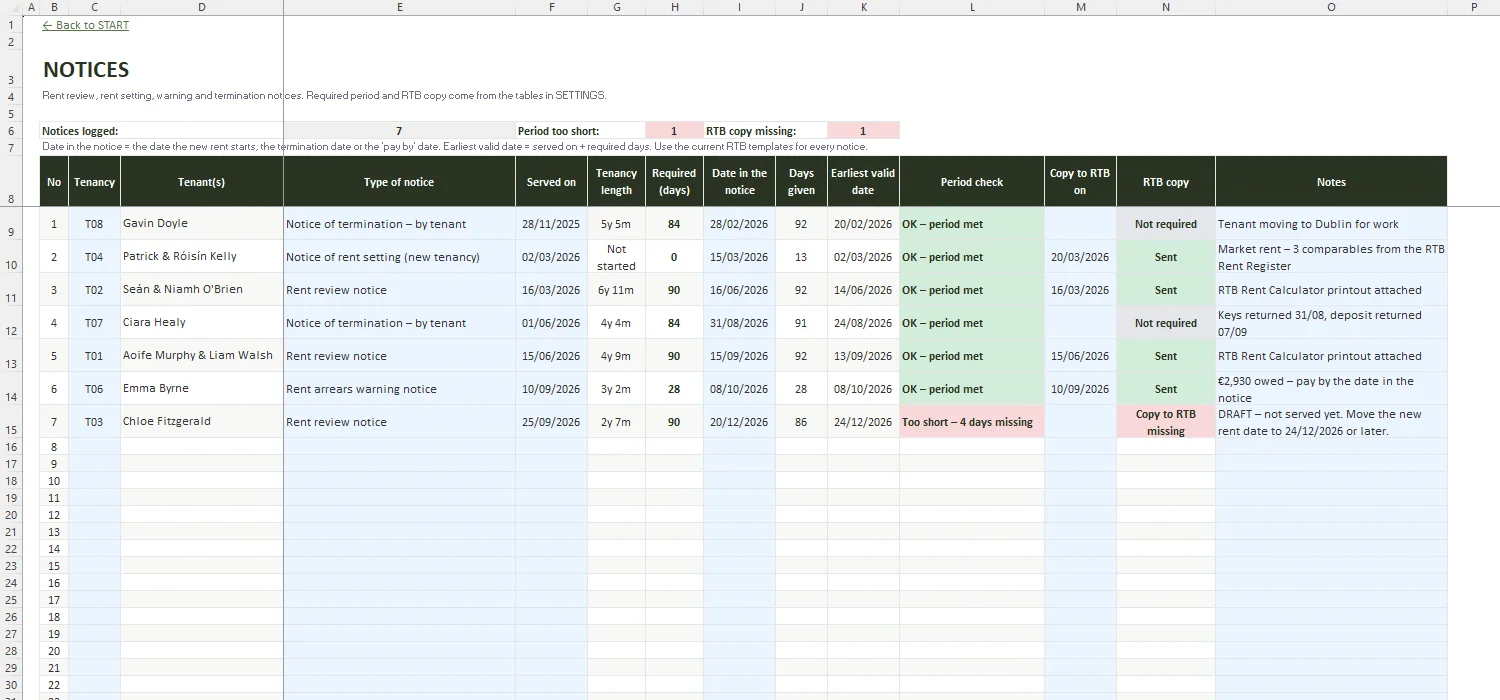
Rent review, rent setting, warning and termination notices – required period, earliest valid date and RTB copy.
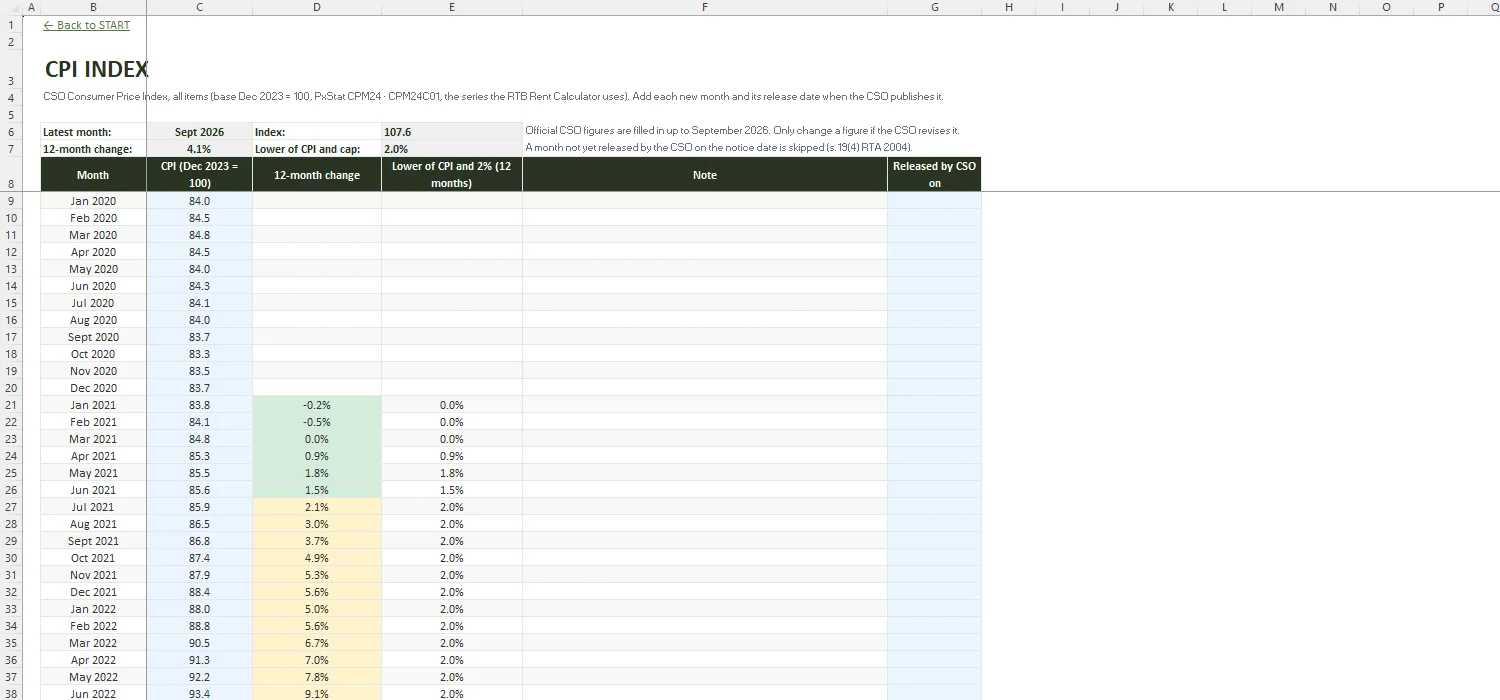
CSO Consumer Price Index (all items, the series the RTB calculator uses) from January 2020 with release dates, ready for each new month.
Rent roll, due vs received, CPI against the 2% cap and the estimated room at each next review.
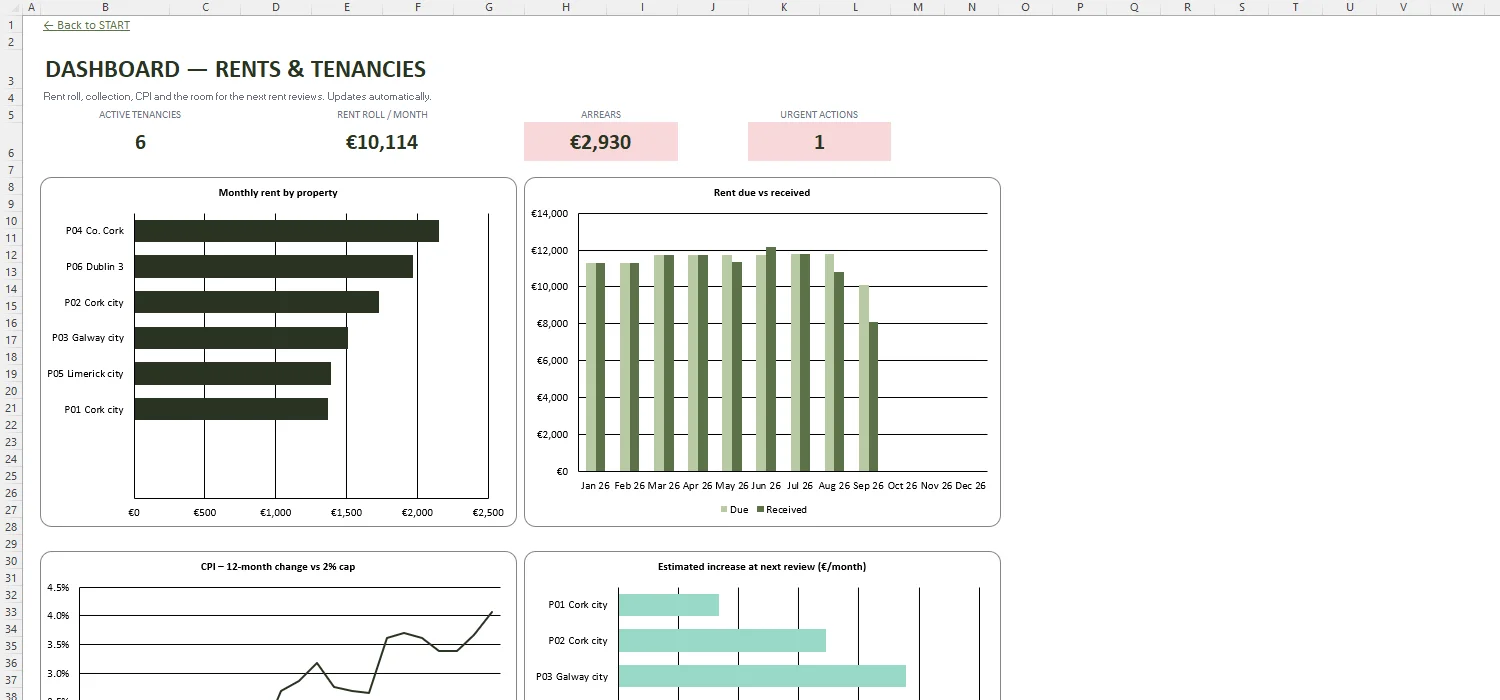
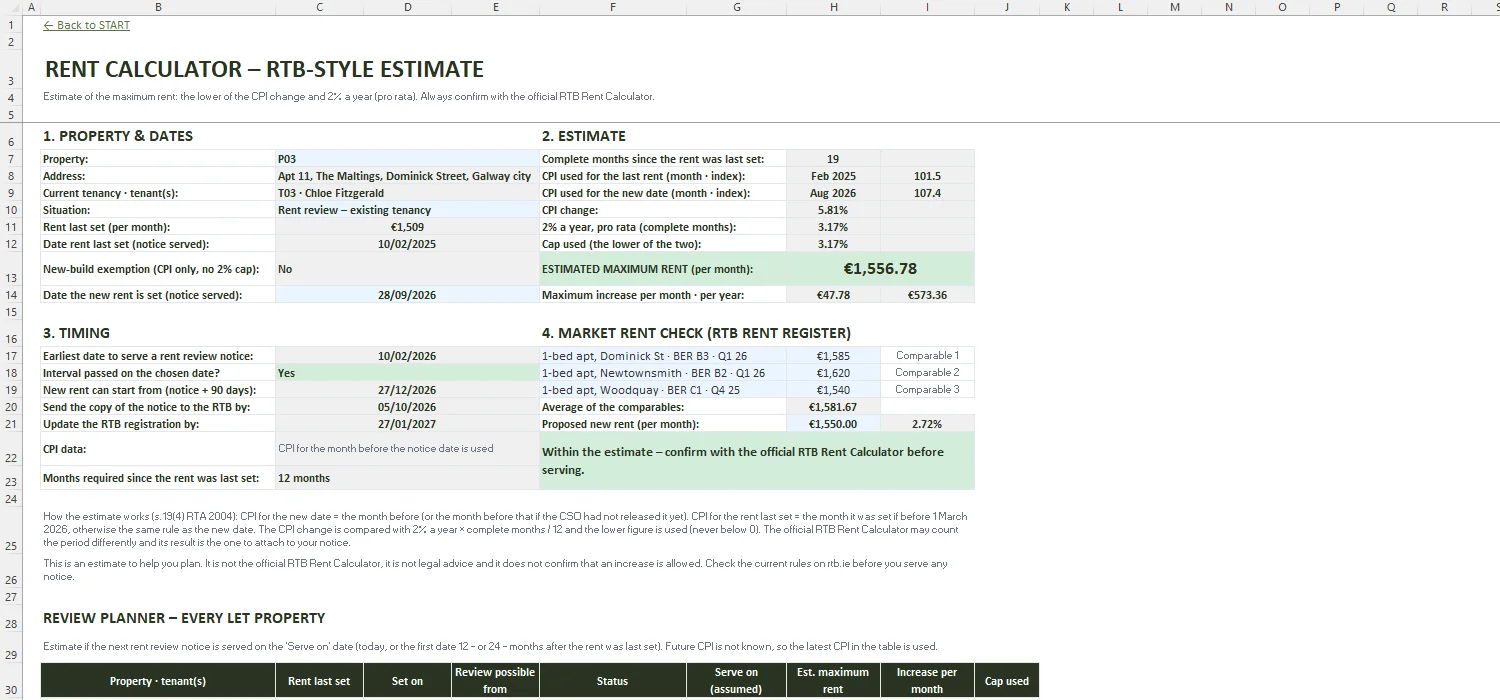
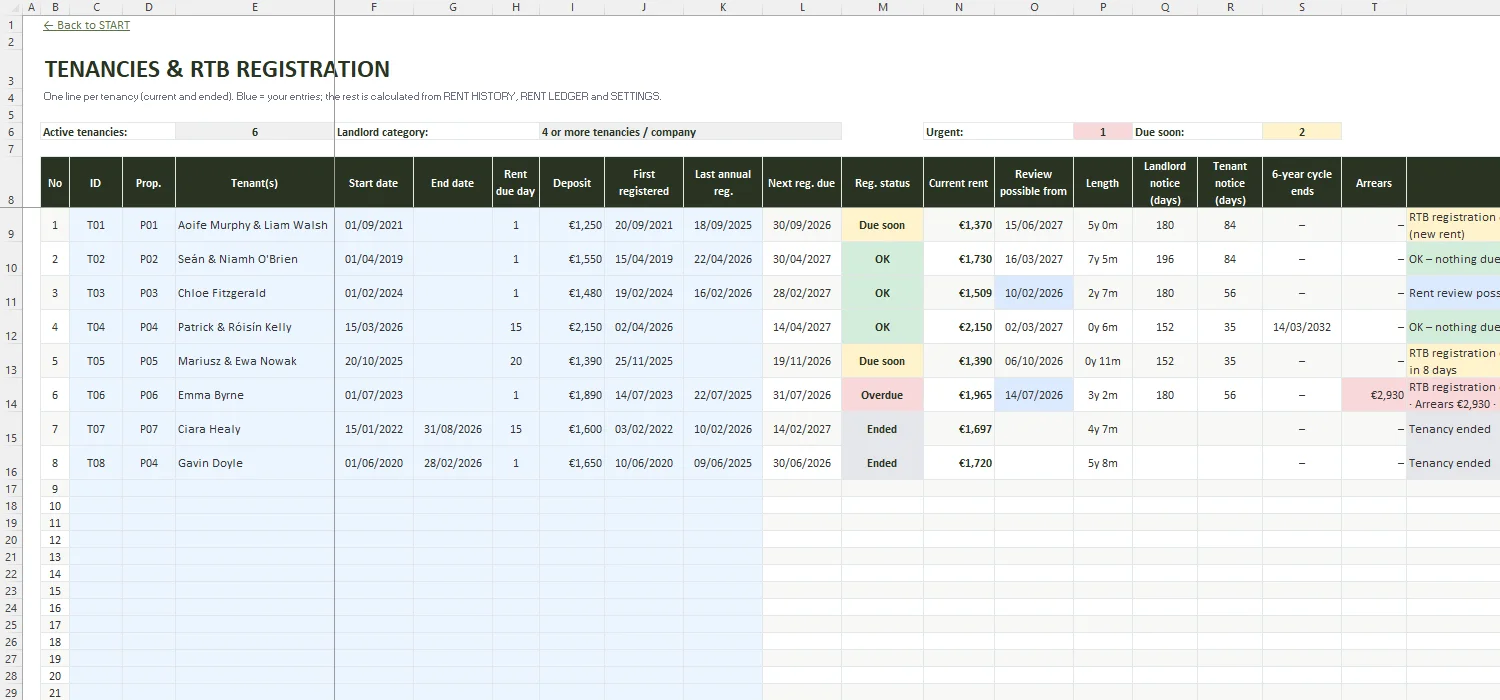
In general the rent can be reviewed once every 12 months, and the increase is capped at the lower of CPI inflation and 2% a year (pro rata) under the rules in force from 1 March 2026. If the tenancy already existed when its area became a rent pressure zone (for example on 20 June 2025), the first review comes 24 months after the rent was last set. The TENANCIES sheet shows the date from which each rent review is possible, and the RENT CALCULATOR estimates the maximum. Always check the current rules on rtb.ie.
Yes. According to the RTB's guidance, the rent review notice goes to the tenant at least 90 days before the new rent, a copy goes to the RTB within 7 days (since 14 September 2026), and the tenancy registration must be updated within one month of the rent change. RENT HISTORY and NOTICES record these dates and flag what is missing.
Compare the CSO Consumer Price Index for the month before the new rent is set with the index for when the rent was last set (the month it was set if before 1 March 2026, otherwise the month before), and compare that change with 2% a year for the same number of months – the lower of the two applies. The workbook does this for you with the official CSO figures in the CPI INDEX sheet. It is an estimate: the official RTB Rent Calculator is the one to print and attach to your notice.
From 1 March 2026 the rent cap (CPI or 2%, whichever is lower) applies nationwide, new tenancies run in 6-year cycles, and the reasons a landlord can end a new tenancy depend on whether they have 1–3 tenancies or 4 or more. Rent can be reset to market rent between tenancies only in certain cases. SETTINGS summarises the figures used and they can be edited if the rules change.
Every tenancy is renewed once a year, within one month of each anniversary of its start. The fee is €40 per tenancy, plus a late fee of €10 per month or part of a month. The workbook shows the next deadline for every tenancy and warns you in advance – the renewal itself is done on the RTB portal.
No. It is an independent Excel workbook and is not affiliated with the Residential Tenancies Board. It helps you organise your tenancies and plan rent reviews, but it never confirms that an increase or a notice is valid. Use the RTB's own calculator, templates and guidance before you serve a notice.
Guide for this template
Budget, levies, arrears & sinking fund for OMCs
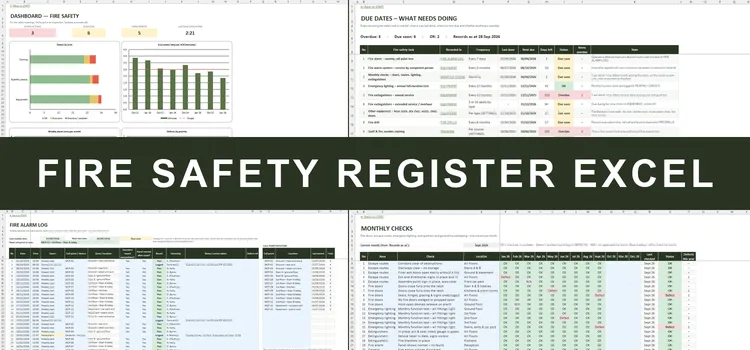
Fire safety log book with due-date alerts for Irish buildings
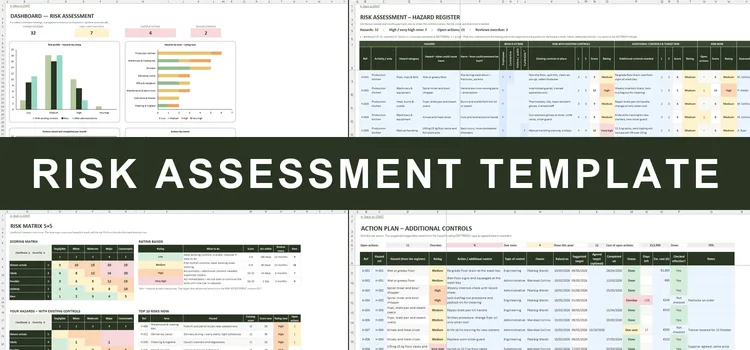
Hazard register, 5×5 risk matrix, action plan & Safety Statement checklist
Rent review estimate, tenancy register & RTB deadlines for Irish landlords · €69
An RTB rent calculator tells you the maximum rent increase at a rent review. This Excel workbook gives you an RTB-style estimate – a rent increase calculator for Ireland under the CPI / 2% rule (what many landlords still call the rent pressure zone calculator) – and keeps the result next to the full rent history of each tenancy.
It also tracks what the RTB expects around it: RTB registration and annual renewal dates, the rent review notice with 90 days' notice, the notice of termination periods by length of tenancy and a rent ledger for arrears. A practical landlord spreadsheet for Ireland for anyone letting one to twenty homes.