Rental income tax Ireland 2026: a worked example, from rent to preliminary tax
What you can deduct, why RTB registration decides your mortgage interest, and a full 2026 example – income tax, USC, PRSI and the €1,000 relief – ending with the preliminary tax due by 31 October.
Contents
- How rental profit is worked out (Case V in one minute)
- Expenses you can claim – and the ones Revenue refuses
- Mortgage interest and the RTB registration condition
- Worked example: one apartment, twelve months of figures
- Rental income tax Ireland 2026: income tax, USC, PRSI and the relief
- Preliminary tax: the 90%, 100% and 105% options
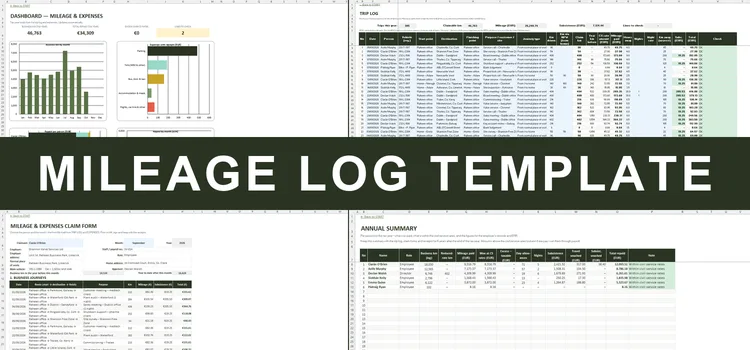
- Records to keep through the year so the Form 11 is easy
Rental income tax Ireland, in short: you pay income tax on your rental profit – the rent less allowable expenses, mortgage interest and wear and tear – at your marginal rate of 20% or 40%, plus USC and, for most landlords, PRSI. In 2026 a landlord who meets the conditions also gets up to €1,000 off the income tax through the Residential Premises Rental Income Relief. In the worked example below, an apartment let at €1,800 a month, the bill for 2026 is €3,215.60: 36% of the profit and almost all of the year's cash surplus.
The timing is what catches landlords out. With net rental income over €5,000 you file a Form 11, and by 31 October 2026 – 18 November 2026 if you pay and file on ROS – you file the 2025 return, pay the 2025 balance and pay preliminary tax for 2026, all at once. Forget an expense or let an RTB registration lapse and you pay too much twice: in the balance and again in the preliminary tax that follows.
How rental profit is worked out (Case V in one minute)
Revenue taxes rent from Irish property under Schedule D, Case V. The steps are the same whether you let one apartment or five:
- Start with the gross rent for the calendar year (1 January to 31 December).
- Deduct the allowable expenses and the deductible mortgage interest, property by property.
- Deduct capital allowances (wear and tear) and any Case V losses carried forward from earlier years.
- Add the result to your other income. The profit is taxed at your highest rate, plus USC and PRSI.
With several properties, Revenue wants a profit or loss for each one first, then the total. A rental loss can only be carried forward against future Irish rental profits, never against your salary.
If your non-PAYE income after expenses is no more than €5,000, and the gross no more than €30,000, a PAYE worker can declare the rent on a Form 12 in myAccount. Above either limit you must register for self-assessment and file a Form 11 through ROS.
Expenses you can claim – and the ones Revenue refuses
The cost must relate to the letting and be revenue, not capital, in nature. Revenue's lists of allowed and not allowed expenses come down to this:
| Usually deductible | Not deductible |
|---|---|
| Repairs and maintenance: painting, cleaning, fixing windows, doors or a boiler | Improvements and extensions (capital spending) |
| Insurance against fire and public liability | Local Property Tax (LPT) |
| Letting agent and management fees; accountancy for the rent account | Interest from the purchase until the first tenant moves in |
| RTB registration fee (€40 a year per private tenancy) | The capital part of your mortgage repayments |
| Service charges, ground rent, and utilities you pay and don't recharge | Your own labour on repairs |
| Mortgage interest – 100%, if the RTB condition below is met | Costs after the last letting has ended |
Wear and tear on furniture and appliances
Furniture, fittings and white goods are capital, so instead of deducting the cost you claim a wear and tear allowance of 12.5% of the cost a year for eight years. A €6,400 furnishing pack gives €800 a year until it has been fully claimed.
Pre-letting and retrofitting
Two targeted deductions sit on top of the normal rules. If a residential property has been vacant for at least six months, pre-letting expenses in the 12 months before it is let again can be deducted up to €10,000 per property, for spending up to 31 December 2027. The deduction is clawed back if you stop letting the property within four years.
If you get an SEAI grant for energy upgrades, the retrofitting deduction covers your own cost after the grant, up to €10,000 per property, for works carried out by 31 December 2028. From 2026 it applies to up to three properties and is claimed in the year you spend the money.
Mortgage interest and the RTB registration condition
Interest on a loan used to buy, improve or repair a residential letting has been fully deductible again since 1 January 2019. The condition is that every tenancy in the property is registered with the Residential Tenancies Board. Revenue's manual on RTB registration is blunt: there is no apportionment. If one tenancy in a dwelling is unregistered, all the interest on that dwelling is lost for the year.
Three details catch people out:
- Revenue treats the condition as met if the registration is in place by the return filing date for that year.
- Registering late costs an extra €10 a month on top of the €40 fee, but it can restore interest that was refused, within the usual four-year limit.
- Interest counts only while the property is let, or between lettings if you don't live there in the meantime.
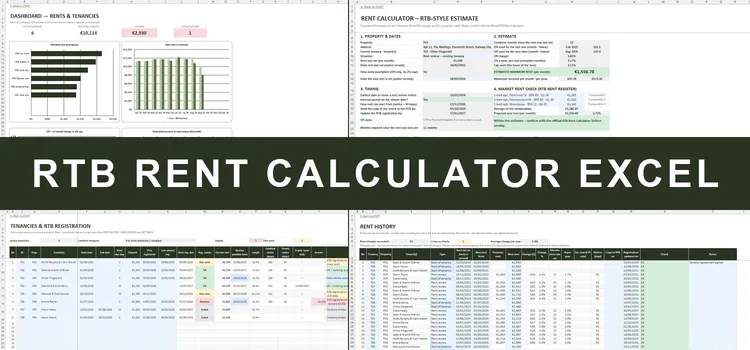
Since 4 April 2022 every tenancy must be registered every year, within a month of its anniversary. With several tenancies, an RTB tenancy register with renewal warnings keeps those dates in one place.
Worked example: one apartment, twelve months of figures
Example (fictitious): Aoife is single, under 66 and earns a salary of €62,000 in 2026. She owns a furnished two-bed apartment in Cork, let all year at €1,800 a month to a tenant who isn't a relative, under a tenancy registered with the RTB. She bought the furniture and appliances in 2023 for €6,400.
| 2026 | € |
|---|---|
| Gross rent (12 × €1,800) | 21,600.00 |
| Mortgage interest (lender's statement, 100%) | −6,200.00 |
| Letting agent management fee | −2,400.00 |
| Service charge (management company) | −1,300.00 |
| Repairs (boiler, repainting) | −1,150.00 |
| Landlord insurance | −520.00 |
| Accountant – rent account | −350.00 |
| RTB annual registration | −40.00 |
| Wear and tear (€6,400 × 12.5%, year 4 of 8) | −800.00 |
| Rental profit (Case V) | 8,840.00 |
Not in the table: €5,700 of capital repaid on the mortgage and €405 of LPT. Both left Aoife's account and neither is deductible. That's why her cash surplus is only €3,535 (€21,600 less €11,960 of expenses, €5,700 of capital and €405 of LPT), while she is taxed on €8,840.
Even with one property, that is nine lines from bank statements, a lender's statement, invoices and a furniture list. With two or three properties and shared costs, it's easy to drop one.
Rental income tax Ireland 2026: income tax, USC, PRSI and the relief
Aoife's salary already uses her tax credits and standard rate band, so every euro of rental profit is taxed at 40%. These are the 2026 figures from Revenue's rate tables:
| Charge | 2026 |
|---|---|
| Income tax | 20% up to €44,000 (single), 40% above. Married couple: €53,000, plus up to €35,000 for a second income |
| USC | 0.5% to €12,012, 2% to €28,700, 3% to €70,044, 8% above. None if total income is €13,000 or less |
| PRSI | 4.2% to 30 September and 4.35% from 1 October 2026 (4.2375% blended on self-assessed income): Class K for employees, Class S for the self-employed. None if this income is under €5,000 a year |
| Rental income relief | Tax credit: the lowest of €1,000 and 20% of the rental profit after capital allowances and losses |
| Aoife's tax on the rent, 2026 | € |
|---|---|
| Income tax: €8,840 × 40% | 3,536.00 |
| Less rental income relief | −1,000.00 |
| USC: €8,044 × 3% + €796 × 8% | 305.00 |
| PRSI: €8,840 × 4.2375% | 374.60 |
| Total tax on the rental income | 3,215.60 |
Because the PRSI rate changed on 1 October, self-assessed income for 2026 is charged at a blended rate of 4.2375% – nine months at 4.2% and three at 4.35% – as the Department of Social Protection sets out. Revenue used the same method for 2025 (4.125%). The relief reduces income tax only, not USC or PRSI. Under Revenue's manual on the relief, Aoife qualifies because on 31 December 2026 she owns the apartment, it is let under an RTB-registered tenancy, she is LPT compliant and she holds tax clearance. If she stops letting it within four years of the first year she claimed, the relief is clawed back.
What the RTB condition is worth here: if Aoife's tenancy were not registered, the €6,200 of interest would not be deductible and she would lose the relief. Her profit would rise to €15,040 and the tax to €7,454.32 – €4,238.72 more for the same year.
Looking ahead to 2027: Budget 2027, announced on 6 October 2026, raises the standard rate band to €46,500 for a single person and the top of the 2% USC band to €30,300, subject to the Finance Bill. No extension of the rental income relief was announced, so under current law 2027, at €1,000, is its last year.
Preliminary tax: the 90%, 100% and 105% options
Preliminary tax is your payment on account of the income tax, USC and PRSI for the current year. To avoid interest it must be at least the lowest of:
- 90% of the final liability for the current year;
- 100% of the liability for the previous year; or
- 105% of the liability for the year before that – only if you pay by direct debit, and not if that year's liability was nil.
For 2026 the deadline is Saturday 31 October 2026. If you both pay and file on ROS, it moves to Wednesday 18 November 2026 (eBrief No. 034/26).
| Aoife's options for 2026 | € |
|---|---|
| 90% of the 2026 estimate (€3,215.60) | 2,894.04 |
| 100% of her 2025 liability (€2,780) | 2,780.00 |
| 105% of her 2024 liability (€2,520) – direct debit only | 2,646.00 |
Aoife doesn't pay by direct debit, so her minimum is €2,780: 100% of last year's figure, which is already fixed. The 90% route only works if your estimate holds: if the final 2026 figure turns out higher – a rent increase, or a cost Revenue treats as capital – the payment falls short and interest runs from the due date. In your first year as a landlord, preliminary tax may not be needed at all.
Records to keep through the year so the Form 11 is easy
- Rent received for each property and month, including arrears and rent paid in advance.
- Every invoice and receipt, tagged to a property and marked as revenue or capital.
- The lender's annual interest statement for each loan – interest only, not capital.
- RTB registration confirmations and the renewal date of every tenancy.
- A list of furniture and appliances with date and cost, for wear and tear.
- LPT receipts and your tax clearance status – both decide the relief on 31 December.
Revenue expects records to be kept for six years. A cost shared between properties needs a split you can explain. Setting aside a twelfth of the expected bill each month – €268 for Aoife – turns 31 October into a payment, not a scramble.
This is general information, not tax advice, and it doesn't replace your accountant or the Form 11.
Frequently asked questions
How much rental income is tax free in Ireland?
On an ordinary letting there is no tax-free amount: the whole rental profit is taxable, and the rental income relief is a credit of up to €1,000 off the income tax, not an exemption. The exception is rent-a-room relief for rooms in your own home, which exempts up to €14,000 a year in 2026; Budget 2027 is raising the limit to €16,000 from 2027.
Do PAYE workers pay PRSI on rental income?
Generally yes. Employees with rental or other unearned income pay PRSI on it under Class K – 4.2% up to 30 September 2026 and 4.35% from 1 October 2026, so 4.2375% on 2026 income – unless that income is under €5,000 a year or another exemption applies. Class K PRSI adds nothing to your social welfare entitlements.
What happens if I miss the 31 October deadline?
A late Form 11 carries a surcharge of 5% of the tax (up to €12,695) if it is filed within two months of the deadline, and 10% (up to €63,485) after that. Tax paid late also attracts interest for every day it is overdue. A separate 10% surcharge can apply if your LPT is not up to date, even when you file on time.
We own the apartment jointly – how is the rent taxed?
Each owner is taxed on their own share of the rental profit, and spouses or civil partners who are jointly assessed include both shares on one return. The rental income relief is split between the owners in proportion to the rent each is entitled to.
Will the rental income relief continue after 2027?
Under current law it covers 2024 to 2027 only: up to €600, €800, then €1,000 for 2026 and 2027. Budget 2027 did not announce an extension, so check Revenue's guidance before counting on it for 2028.
Sources
- Revenue – What expenses are allowed? (Irish rental income) – allowable expenses, RTB fee, mortgage interest condition, wear and tear 12.5% for 8 years
- Revenue – What expenses are not allowed? – LPT, interest before first letting, improvements, own labour, post-letting expenses
- Revenue – Rental profit and losses – profit per property, losses carried forward against Irish rental profits only
- Revenue – How do you declare your rental income? – myAccount below €5,000, Form 11 above
- Revenue – Who should register for Income Tax self-assessment? – €5,000 net / €30,000 gross non-PAYE income; Form 12 below
- Revenue – What is preliminary tax? – 90% / 100% / 105% (direct debit) rule, 31 October, first year
- Revenue – Pay and file system: how does it work? – 31 October 2026, ROS 18 November 2026, late filing surcharges, LPT surcharge
- Revenue – eBrief No. 034/26: Pay and File extension date 2026 – ROS deadline Wednesday 18 November 2026 if you both pay and file on ROS
- Revenue – Do you need to pay PRSI? (self-assessment) – 4.2% to 30/09/2026, 4.35% from 1/10/2026; rental income is liable
- Revenue – Tax rates, bands and reliefs – 2026 standard rate bands: €44,000 / €48,000 / €53,000 + €35,000
- Revenue – Standard rates and thresholds of USC – USC 2026: 0.5% / 2% / 3% / 8%
- Revenue – Tax and Duty Manual Part 15-03-04: Residential Premises Rental Income Relief (March 2026) – €600 / €800 / €1,000 / €1,000, 20% of profit, conditions on 31 December, apportionment, clawback
- Revenue – Tax and Duty Manual Part 04-08-10: RTB registration and interest deduction – no apportionment, registration by filing date, late registration
- Revenue – Tax and Duty Manual Part 04-08-06: deductibility of loan interest – full deductibility restored from 1 January 2019; interest only while let
- Revenue – Tax and Duty Manual Part 04-08-11: Pre-letting expenditure – vacant 6 months, 12 months before letting, €10,000 cap, to 31/12/2027, 4-year clawback
- Revenue – Tax and Duty Manual Part 04-08-12: Capital allowances and rented residential premises – 12.5% a year for 8 years
- Revenue – Tax and Duty Manual Part 04-08-04: Accountancy and administrative costs – accountancy fees for the rent account are allowable
- Revenue – Deduction for retrofitting expenditure – SEAI grant, works to 31/12/2028, three properties from 2026
- Revenue – Tax and Duty Manual Part 04-08-20: Deduction for retrofitting expenditure – €10,000 per property net of grant, in-year claims 2026–2028
- Revenue – Rent-a-Room Relief – €14,000 limit
- Revenue – Keeping records – six years
- Department of Social Protection (gov.ie) – PRSI Class K rates – Class K9 (employees with rental income) 4.20% to 30/09/2026, 4.35% from 1/10/2026; no benefits
- Department of Social Protection (gov.ie) – PRSI Class S rates – blended rate 4.2375% for 2026 self-assessed income (4.125% for 2025)
- Revenue – Guide to Completing 2025 Pay & File Self-Assessment Returns – blended PRSI 4.125% for 2025 (Class K and Class S examples); no PRSI under €5,000
- Citizens Information – Paying social insurance (PRSI) – all PRSI rates +0.15% from 1 October 2026
- Citizens Information – Budget 2027 – announced 6 October 2026: band €46,500, USC 2% band to €30,300, rent-a-room €16,000
- Residential Tenancies Board – Registration fees – €40 a year, late fee €10 a month
- Residential Tenancies Board – Tenancies must now be registered annually – annual registration from 4 April 2022