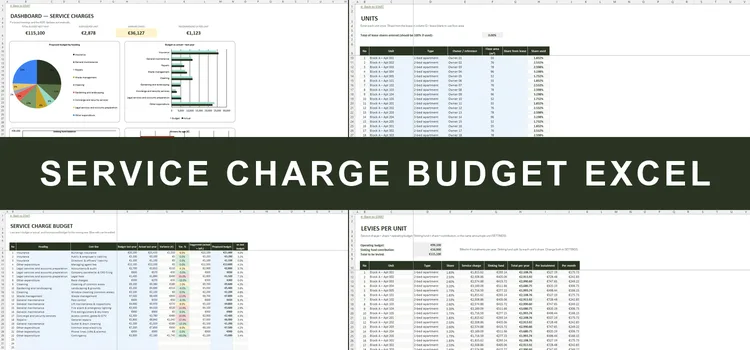
Service Charge Budget Excel
Budget, levies, arrears & sinking fund for OMCs
- Budget in the 9 categories of the MUD Act, vs actual
- Levy per unit from the lease share or floor area
- Arrears aged 0–30 / 31–60 / 61–90 / 90+ days
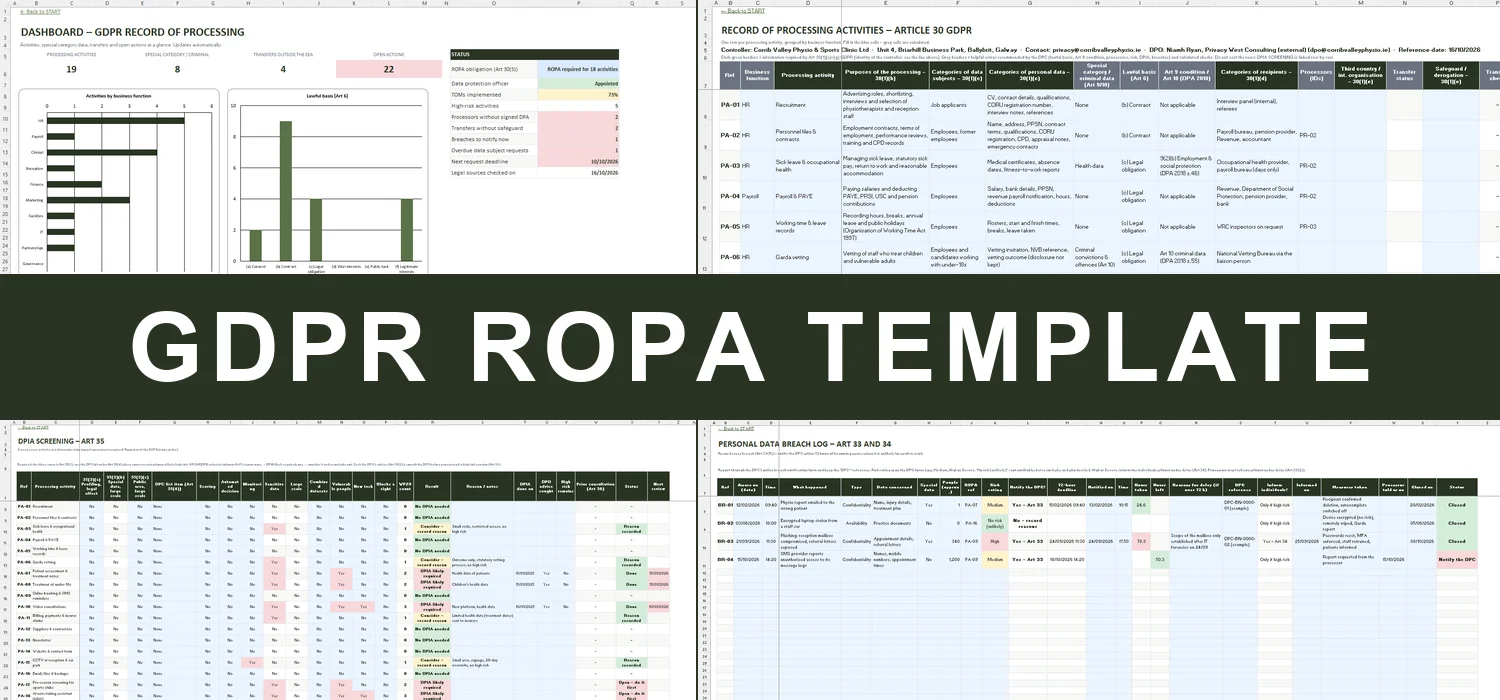
Record of processing activities under Article 30 GDPR for Irish SMEs, clubs, clinics and professionals – with processors, transfers, retention, TOMs, DPIA screening, breach log and SAR log


Enter each processing activity once. The workbook checks the Article 30 fields, the transfers outside the EEA, the need for a DPIA and the deadlines for breaches and access requests – and shows what is still open.
Most small organisations in Ireland have a privacy notice on the website, but no record of what personal data they actually hold, why, who receives it, where it goes and how long it is kept. That gap shows up when an access request arrives, when a mailbox is hacked on a Friday afternoon, or when the Data Protection Commission asks for your record of processing – and expects it within days. In its RoPA sweep the DPC found records that said 'personal data' instead of real data categories, referred to retention policies nobody could open, or still relied on the Privacy Shield.
This Excel template follows Article 30 GDPR and the DPC's RoPA guidance. You record each activity by business function – HR, payroll, clients or patients, marketing, IT – with the mandatory fields clearly marked and the lawful basis, Art 9 condition and Data Protection Act 2018 section as helpful extras. Processors, international transfers, a retention schedule, a TOMs checklist, DPIA screening, a breach log with the 72-hour clock and a subject access request log with the one-month deadline are all linked, with traffic lights and a dashboard.
Key figures, quick links and a step-by-step guide.
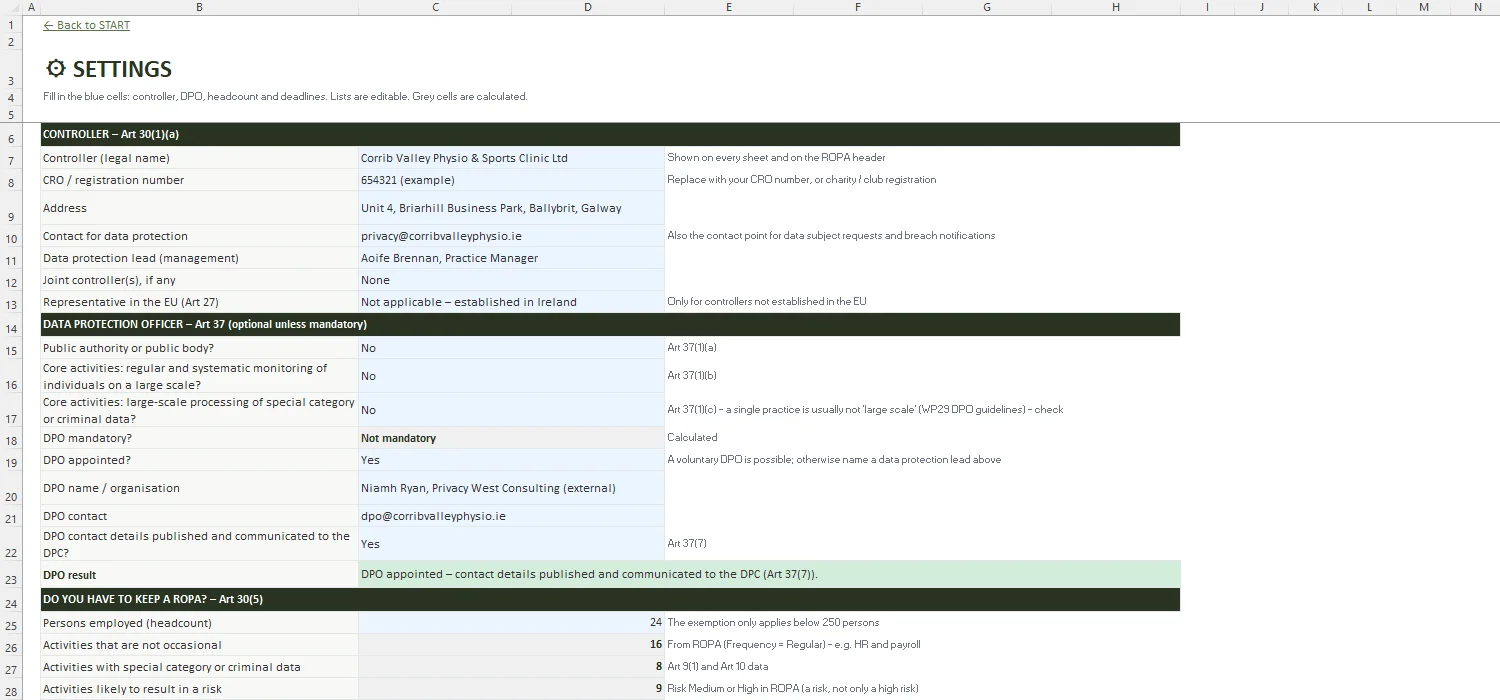
Controller details, DPO check (Art 37), Art 30(5) result, editable deadlines, drop-down lists, Irish public holidays and a table of legal references.
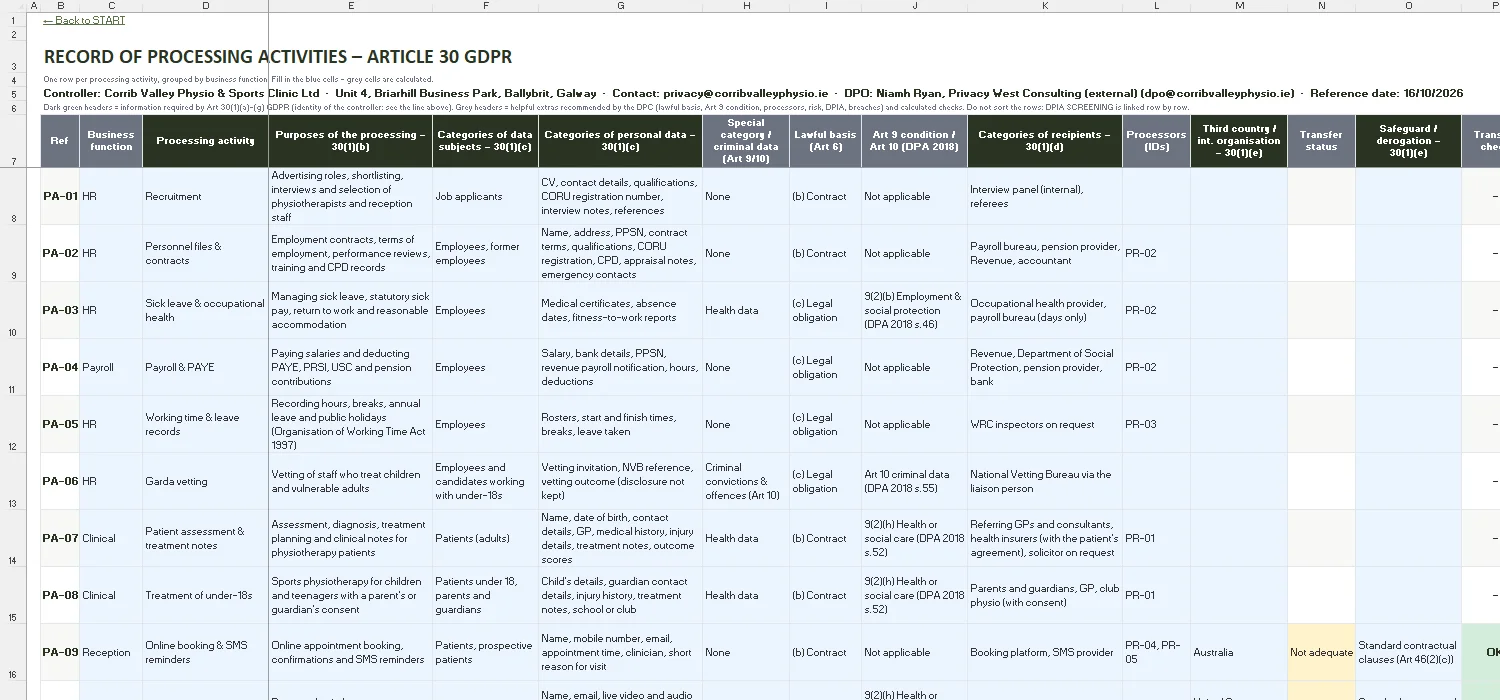
Up to 60 processing activities by business function: purposes, data subjects, data categories, special category data, lawful basis, Art 9 condition, recipients, processors, transfers and safeguards, erasure time limit, security measures, Art 30(5), risk, DPIA status, breaches, review dates and completeness.
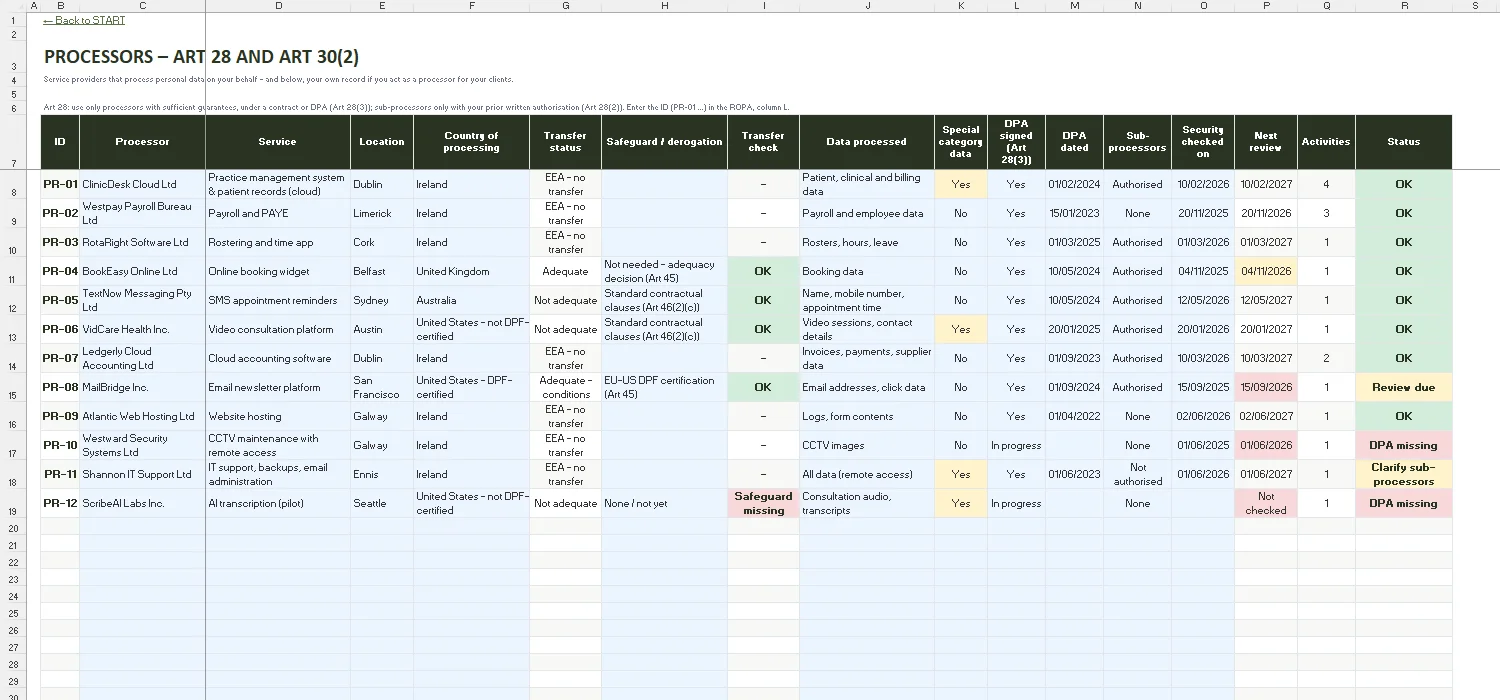
Up to 30 processors with service, country, transfer safeguard, DPA (Art 28(3)), sub-processors, security review and status – plus your own record as a processor (Art 30(2)).
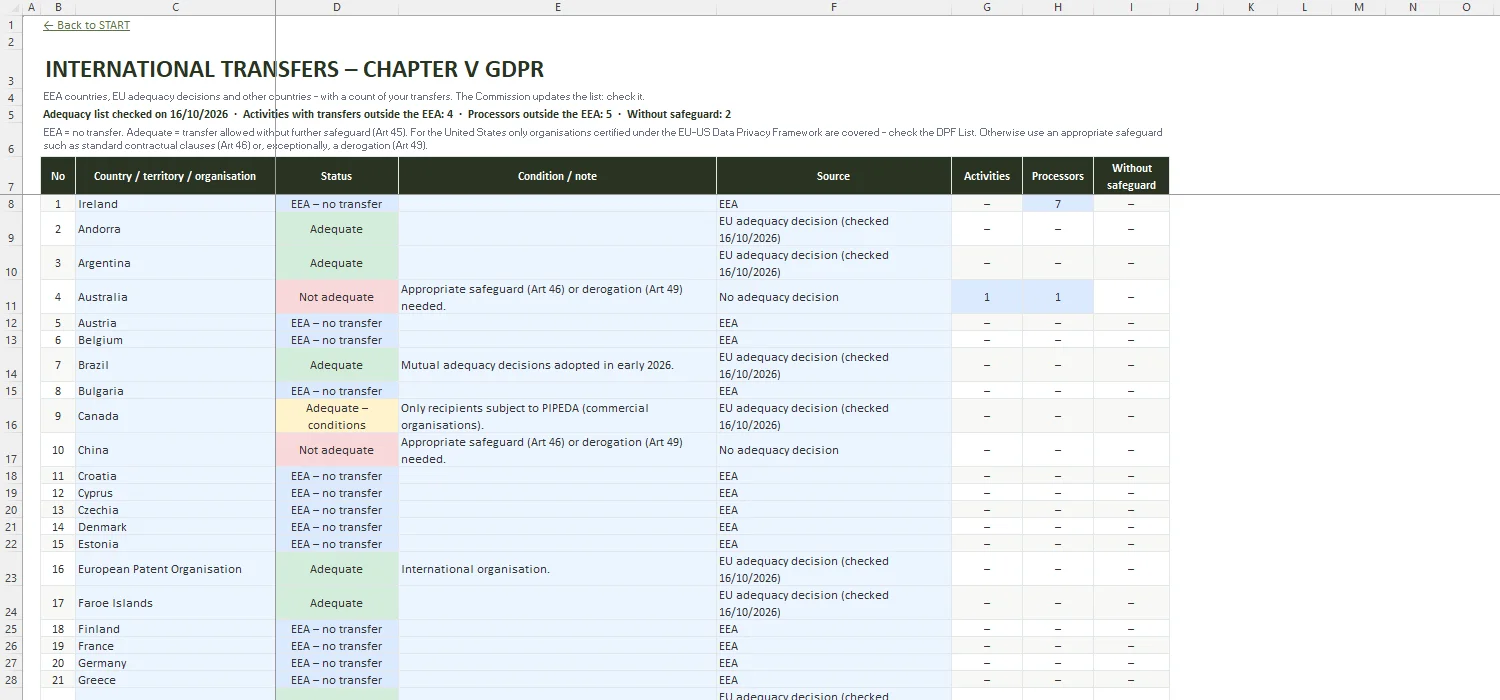
EEA countries, EU adequacy decisions (checked October 2026, incl. UK, Brazil, Korea and the US under the Data Privacy Framework) and other countries, with a count of your transfers and missing safeguards.
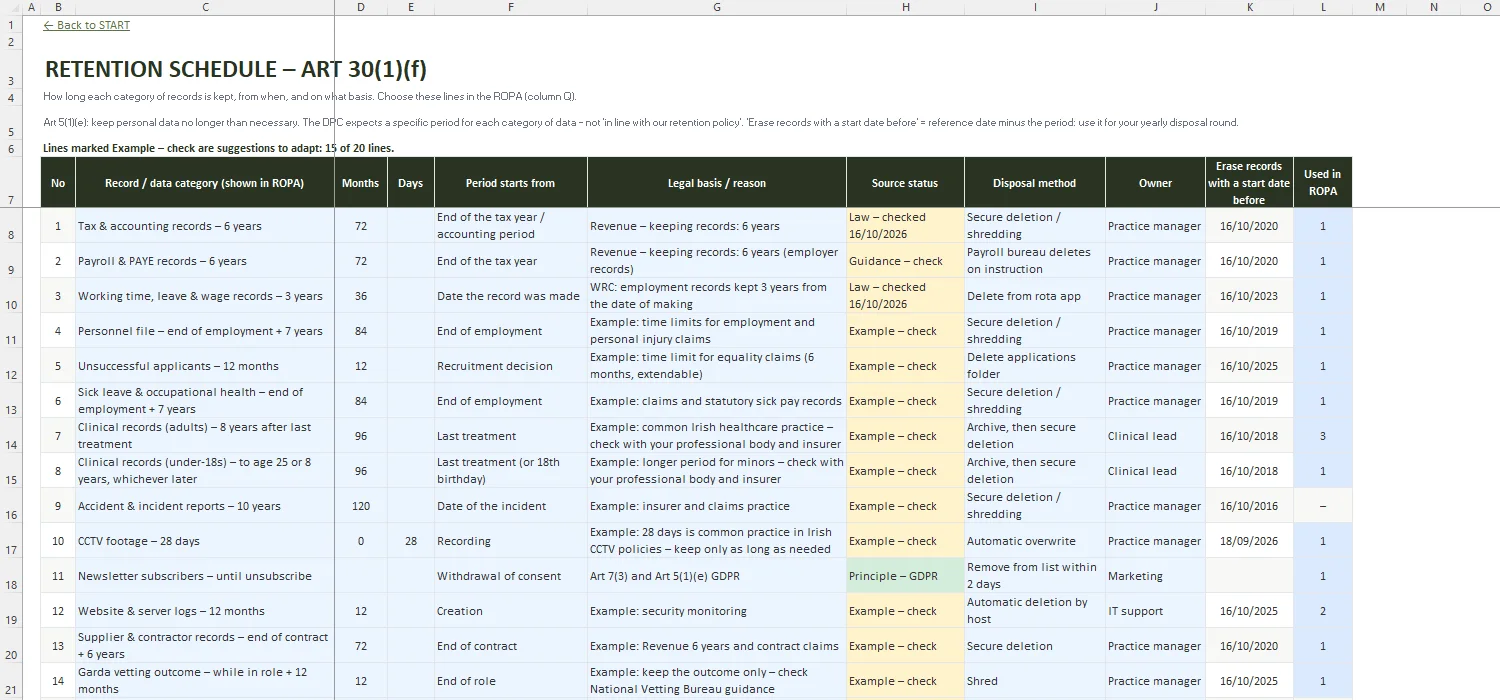
Retention schedule per category of records: period in months or days, trigger, legal basis or reason, source status, disposal method, owner and the 'erase records before' date.
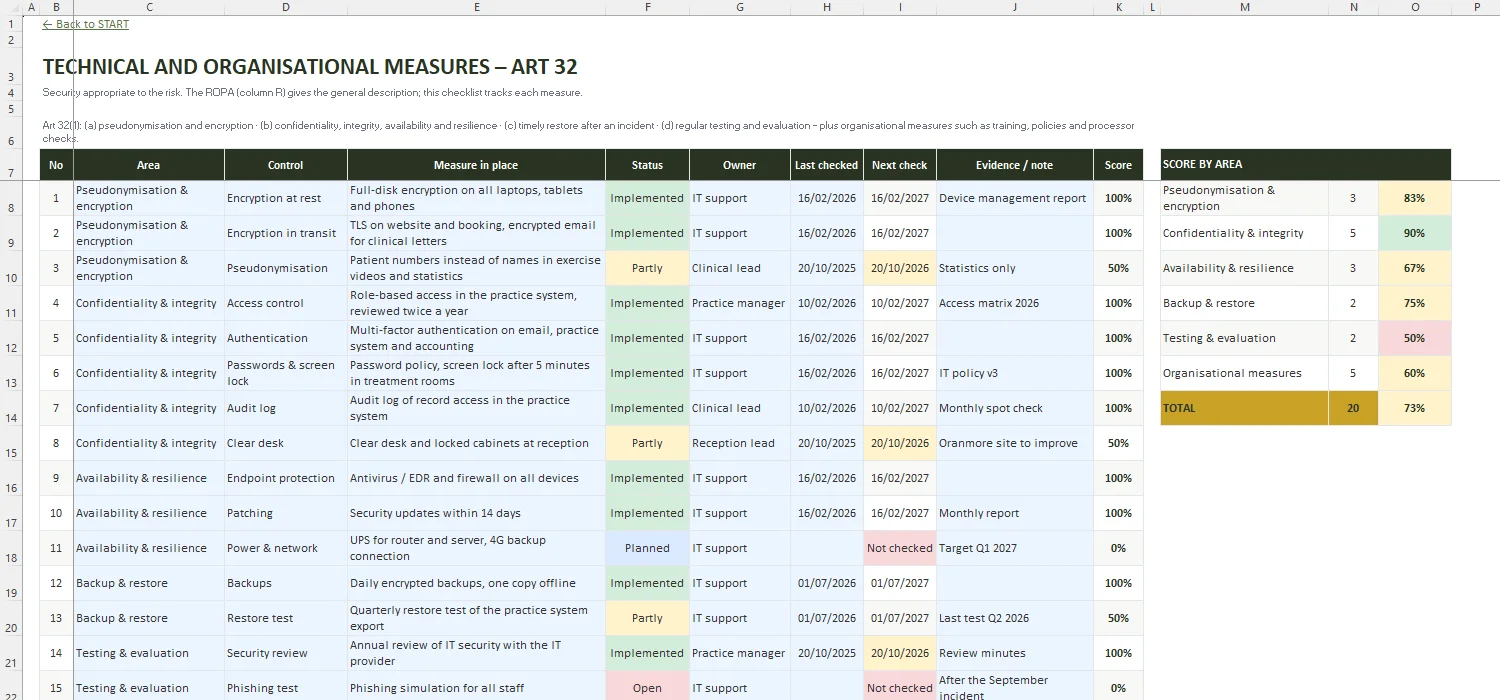
Technical and organisational measures by Art 32 area with status, owner, check dates, evidence and a score per area.
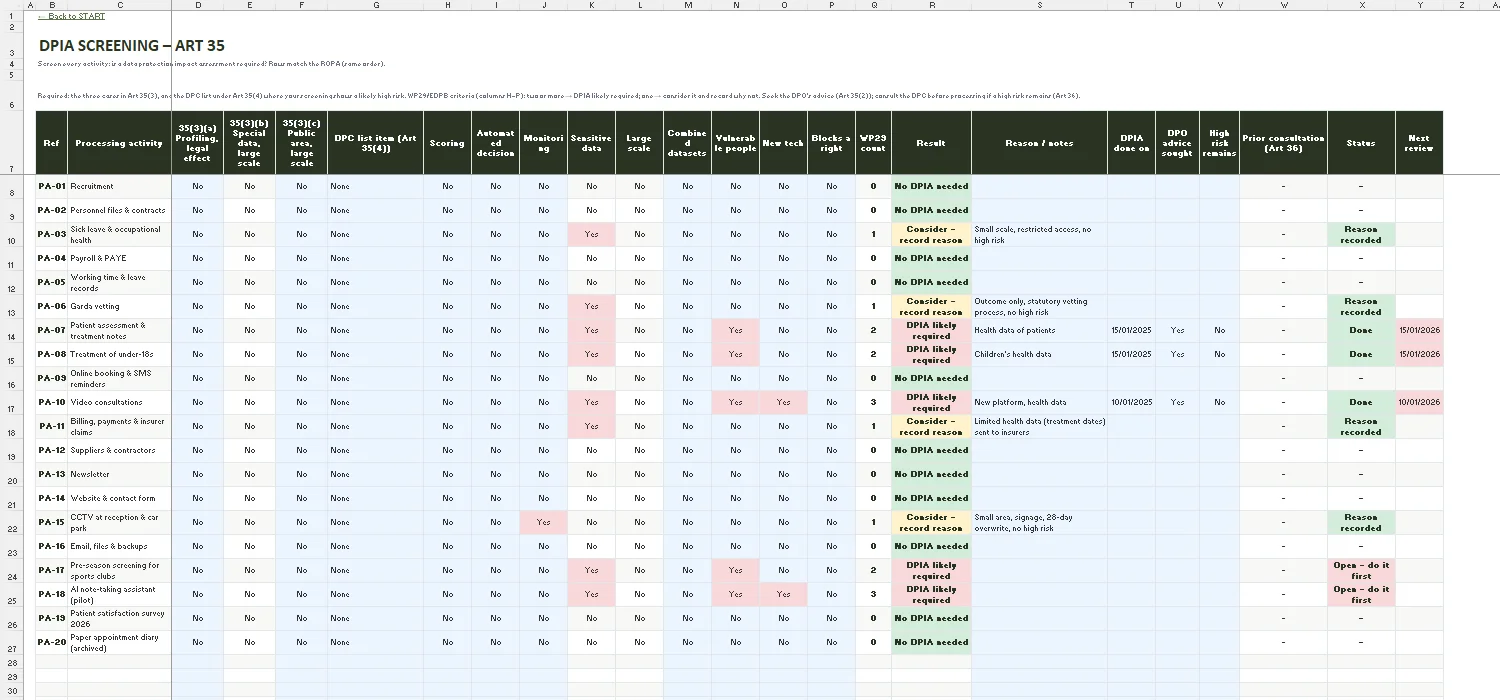
For every activity: the three Art 35(3) cases, the DPC's Art 35(4) list, nine WP29 criteria, the result, DPO advice, residual risk and prior consultation (Art 36).
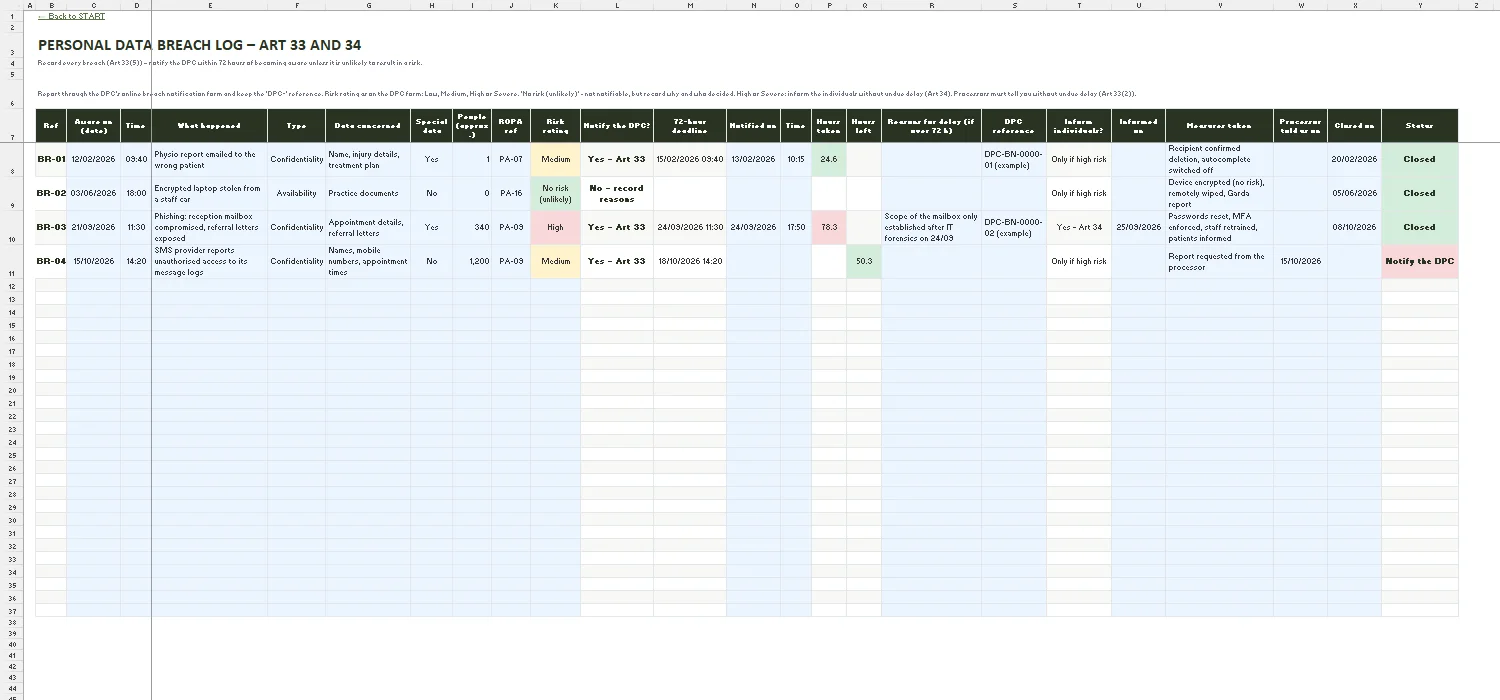
Every personal data breach with the DPC risk rating, the 72-hour deadline, hours taken or left, reasons for delay, DPC reference, Art 34 communication and status.
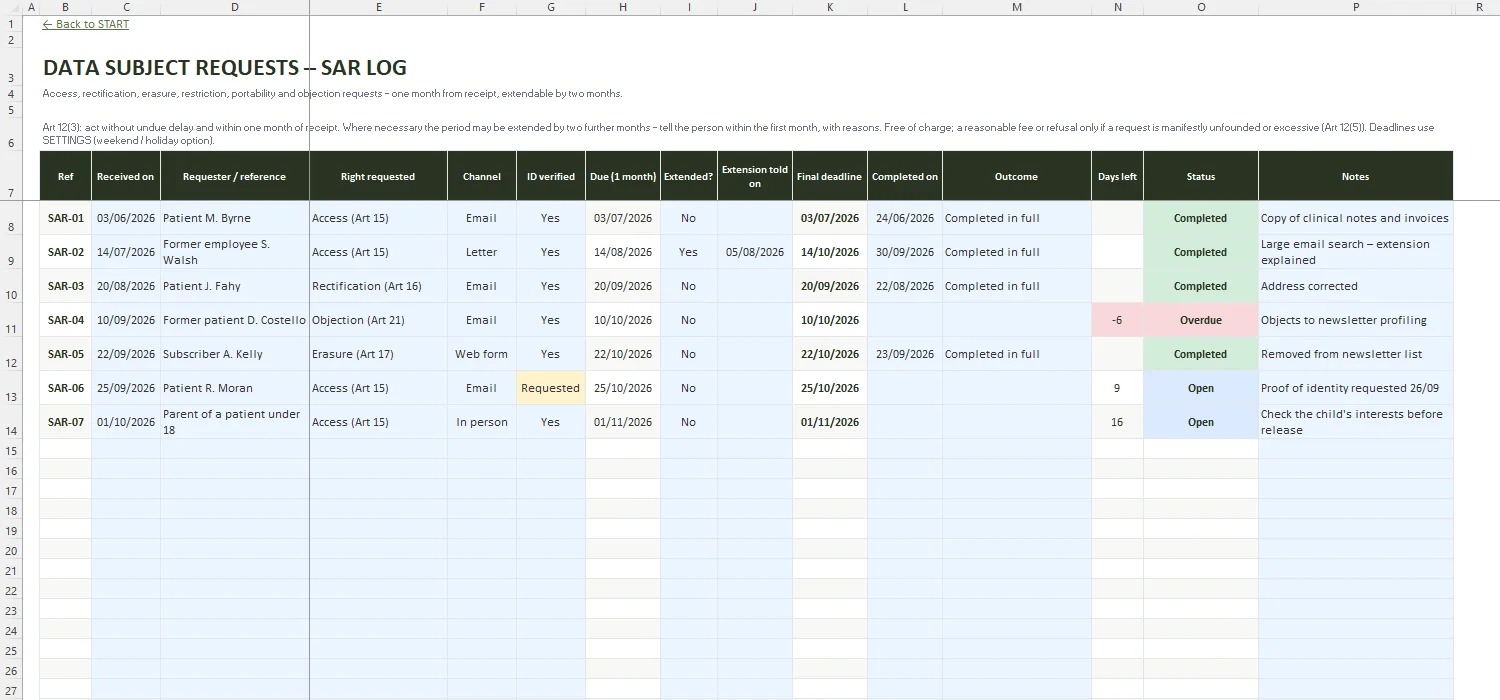
Access, rectification, erasure, restriction, portability and objection requests with the one-month deadline, extension by two months, outcome and status.
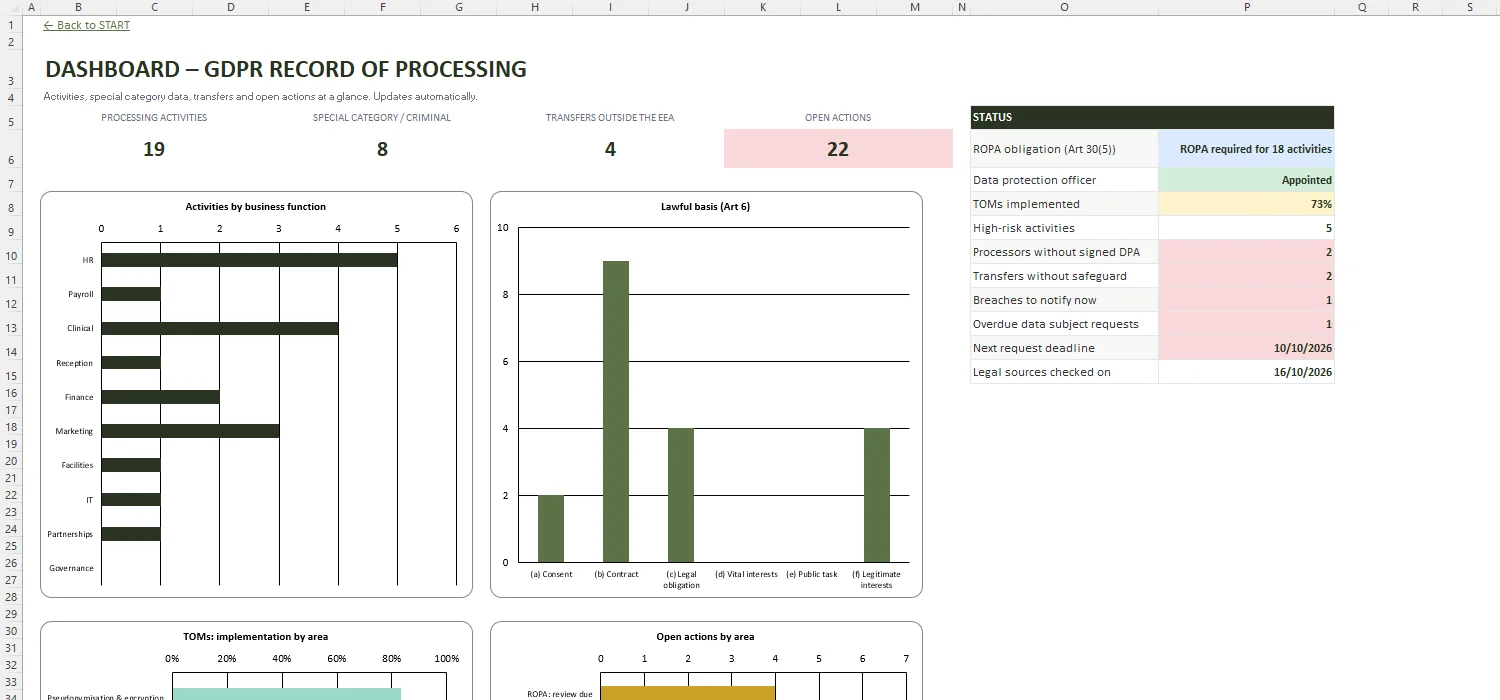
Activities, special category data, transfers and open actions at a glance, with a status panel and four charts.
A ROPA – record of processing activities – is the written record that Article 30 GDPR requires controllers and processors to keep. For each processing activity it sets out the purposes, the categories of people and personal data, the recipients, any transfers outside the EEA with their safeguards, how long the data is kept and a general description of the security measures. You must make it available to the Data Protection Commission on request.
Often yes, at least in part. Article 30(5) exempts organisations with fewer than 250 employees – but not for processing that is not occasional, that is likely to result in a risk, or that includes special category or criminal data. The DPC gives HR and payroll as examples of processing that is not occasional, so most employers need to record those activities. The SETTINGS sheet checks this per activity.
Under Article 30(1): the name and contact details of the controller (and DPO, if any), the purposes, the categories of data subjects and personal data, the categories of recipients, transfers to third countries with the safeguards, where possible the time limits for erasure, and where possible a general description of the security measures. The template marks these columns in dark green and adds the extras the DPC recommends, such as the lawful basis and the Art 9 condition.
Yes – several firms and some regulators offer free spreadsheets. They usually stop at the Article 30 columns. This workbook adds the Art 30(5) check, the current adequacy list, a processors register with DPAs, a retention schedule, DPIA screening and the breach and access-request logs with their deadlines – all linked to the same activities.
Notify the DPC without undue delay and, where feasible, within 72 hours of becoming aware of the breach, unless it is unlikely to result in a risk to individuals (Article 33). Late notifications need reasons. Every breach must be documented, including those you do not notify. The BREACH LOG calculates the deadline and shows the hours taken or left.
Without undue delay and within one month of receipt. Where necessary – for complex or numerous requests – you can extend by two further months, but you must tell the person within the first month and give reasons (Article 12(3)). The SAR LOG calculates both deadlines and flags overdue requests.
Budget, levies, arrears & sinking fund for OMCs
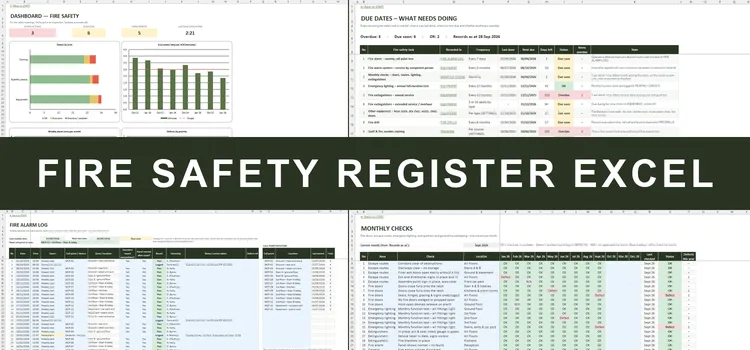
Fire safety log book with due-date alerts for Irish buildings
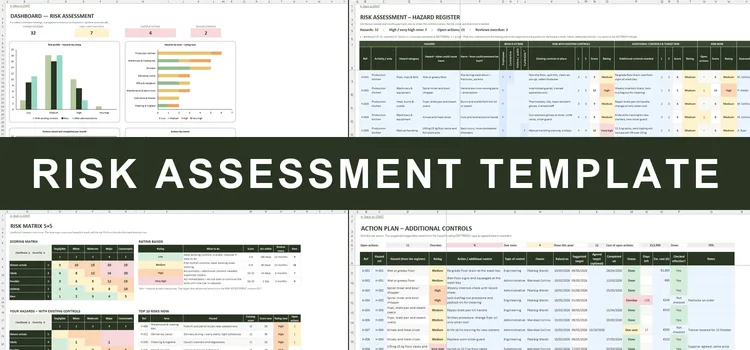
Hazard register, 5×5 risk matrix, action plan & Safety Statement checklist
Record of processing activities under Article 30 GDPR for Irish SMEs, clubs, clinics and professionals – with processors, transfers, retention, TOMs, DPIA screening, breach log and SAR log · €59
This ROPA template is a GDPR record of processing activities template in Excel, built for Irish SMEs, clinics, sports clubs and professional practices. It works as an Article 30 register and a GDPR data map: for each activity you see what personal data you hold, why, on what lawful basis, who receives it, whether it leaves the EEA and how long you keep it – with worked examples for HR, payroll, patient records, booking, newsletters, CCTV and IT.
Besides the record of processing activities itself, the GDPR template includes a processors register for data processing agreements, an international transfers check against the EU adequacy decisions, a retention schedule, a TOMs checklist, a DPIA screening tool, a data breach log with the 72-hour deadline and a subject access request log – so your GDPR documentation, deadlines and evidence stay in one place.