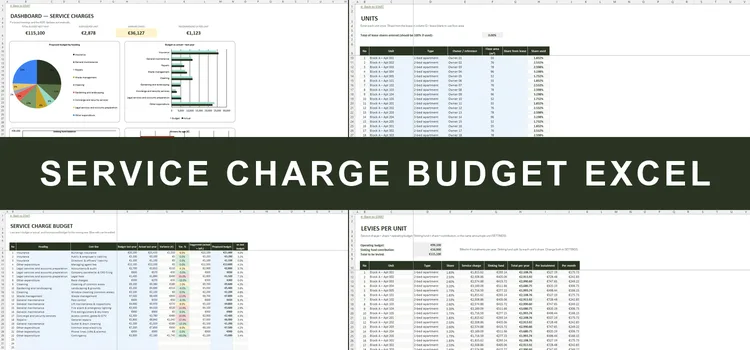
Service Charge Budget Excel
Budget, levies, arrears & sinking fund for OMCs
- Budget in the 9 categories of the MUD Act, vs actual
- Levy per unit from the lease share or floor area
- Arrears aged 0–30 / 31–60 / 61–90 / 90+ days
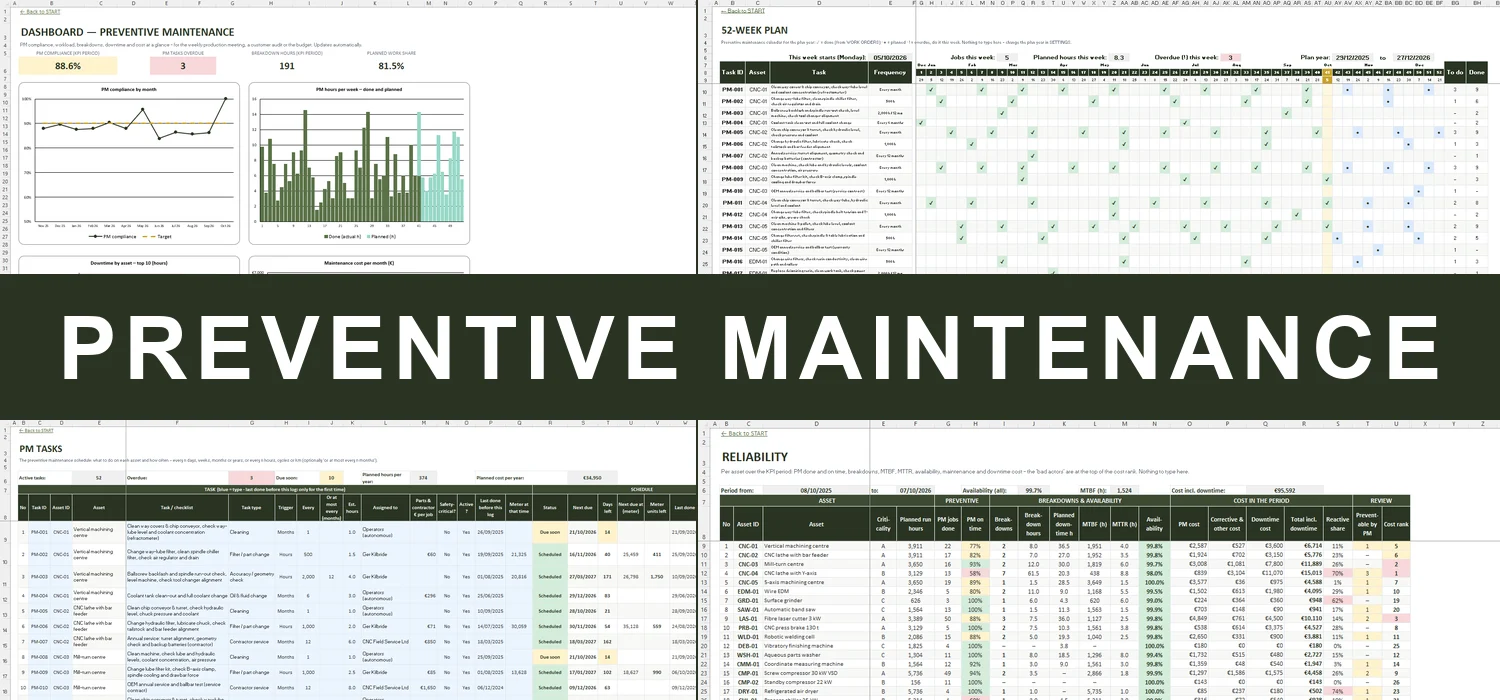
Planned preventive maintenance (PPM) for machines, plant and equipment – PM tasks by date or by hours and cycles, 52-week plan, work orders, spare parts, MTBF and MTTR


List your machines and the PM tasks for each one – by date or by running hours and cycles. Close each job as a work order and the workbook sets the next due date, fills in the 52-week plan, and works out PM compliance, breakdowns, MTBF, MTTR, availability and what maintenance really costs.
In a lot of Irish plants and workshops the maintenance plan is a wall chart, a supplier's service sticker and the fitter's memory. The compressor service is booked when the oil carries over, the coolant is changed when it starts to smell, and when an auditor or a customer asks for the PM records, somebody spends a day pulling them together from job sheets and invoices.
This workbook keeps it in one place. Each asset has its PM tasks with an interval in days, weeks, months or years, or in hours, cycles or km from weekly meter readings – whichever comes first. Every completed work order resets the schedule, the 52-week plan shows what was done and what is coming, and breakdowns are logged with their downtime and cause, so you can see which machines cost the most and whether better PM would have prevented the failure.
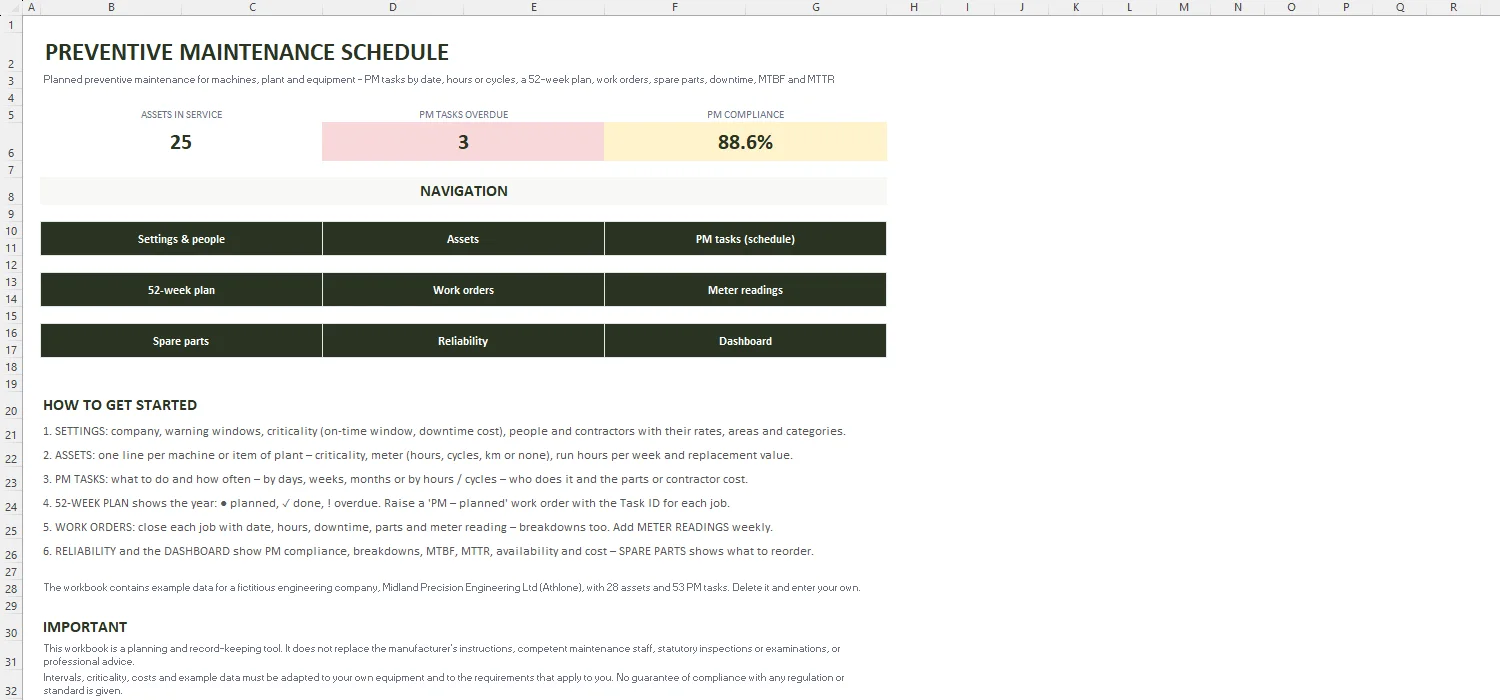
Key figures, quick links and a step-by-step guide.
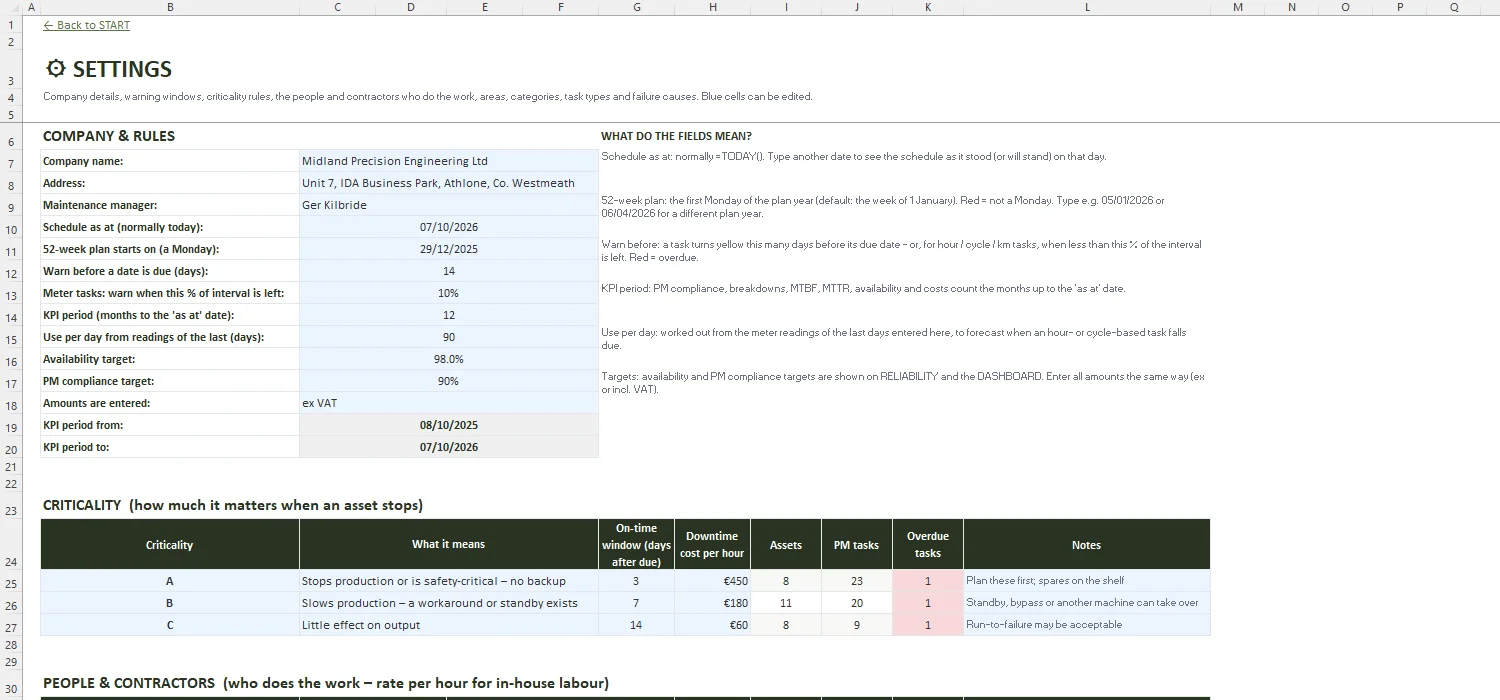
Company, 'schedule as at', start of the 52-week plan, warning windows, KPI period and targets; criticality A / B / C (on-time window, downtime cost per hour), people and contractors with rates, areas, asset categories, task types and failure causes.
Up to 80 machines and items of plant: category, area, make, serial no., criticality, status, meter, run hours per week, replacement value – with asset status, next PM, overdue and due-soon tasks, last meter reading, use per day and breakdowns.
Up to 200 preventive maintenance tasks: interval in days, weeks, months, years, hours, cycles or km (optionally 'or at most every n months'), estimated hours, who does it, parts and contractor cost, safety-critical flag – with last done, next due date and meter, status, open work order and workload per year.
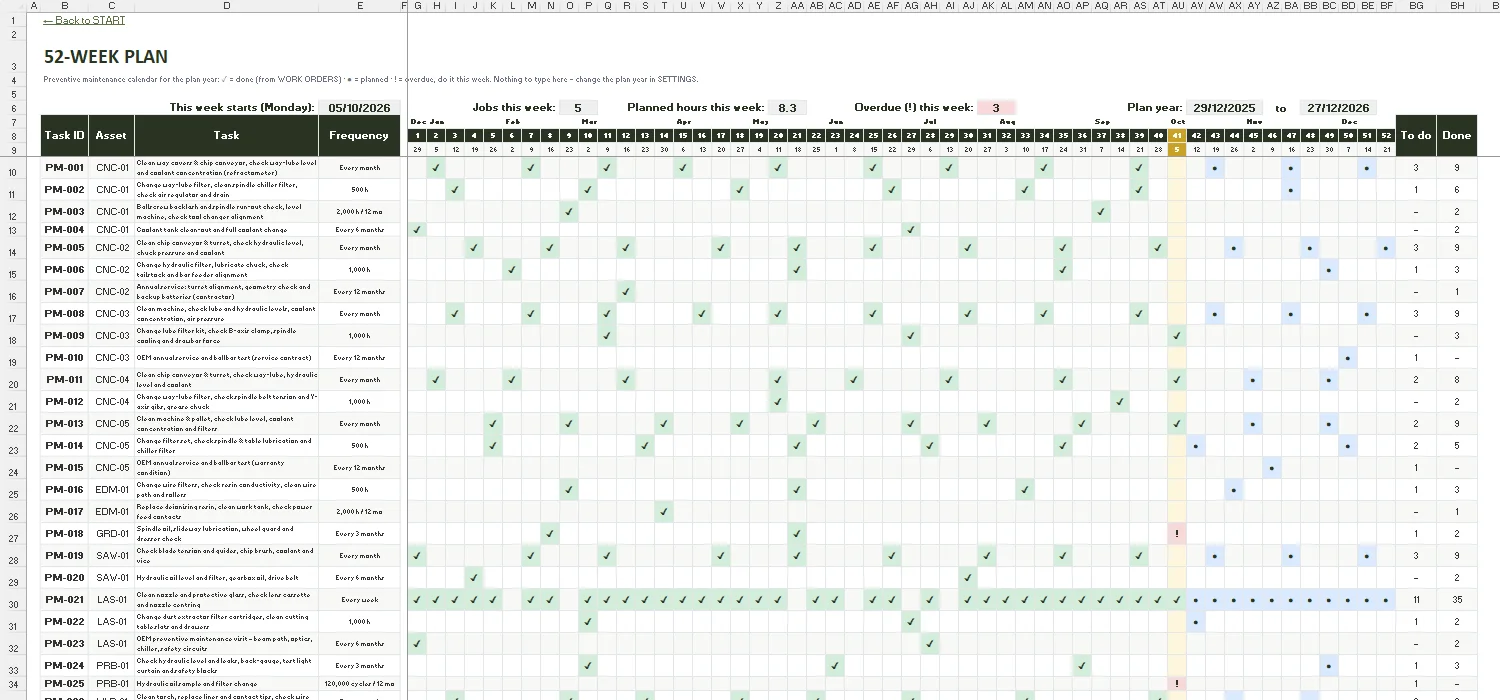
Task × week calendar for the plan year: ✓ done (from the work orders), ● planned, ! overdue – with jobs and planned hours per week and the actual PM hours.
Up to 1,200 jobs: PM with Task ID, breakdowns, planned corrective work and improvements – due and completed dates, meter, labour hours, downtime, failure cause, 'could PM have prevented it?', two parts, materials and contractor cost, status and days open or late.
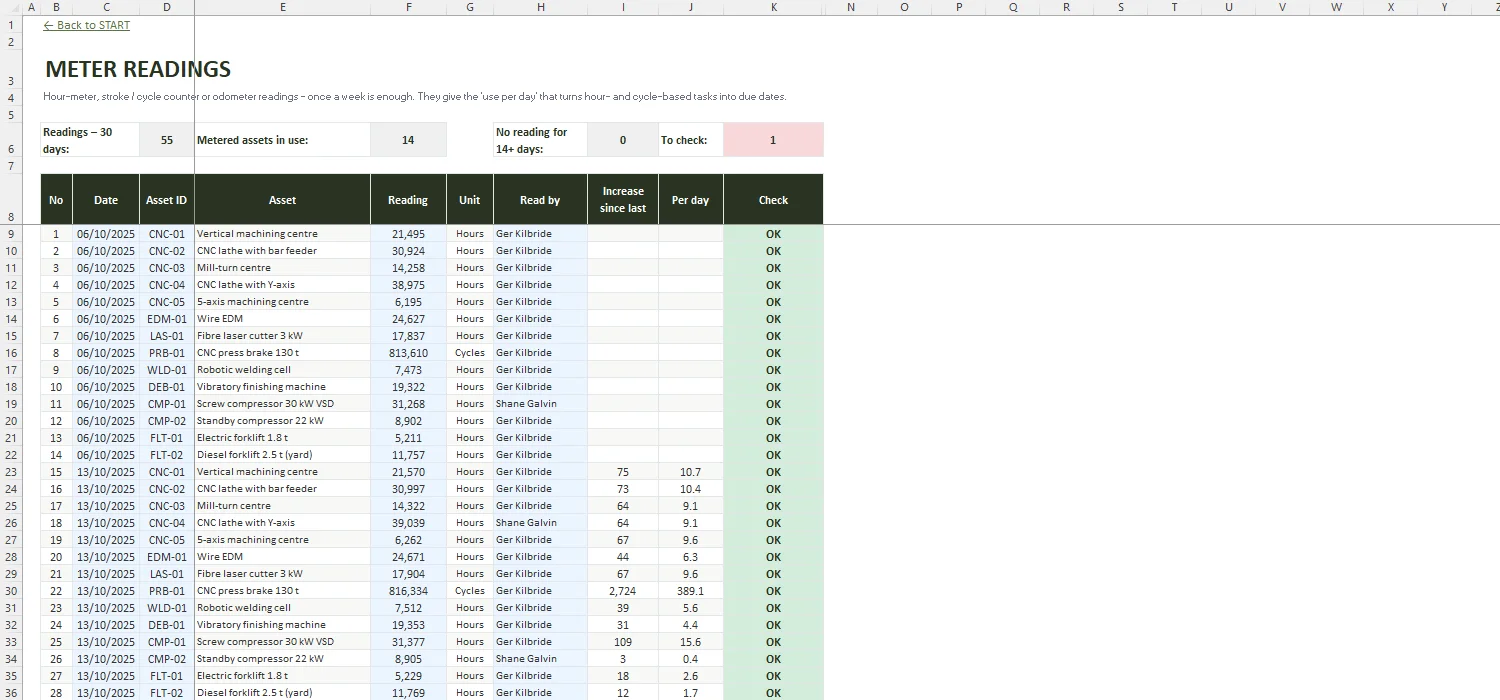
Hour-meter, stroke counter or odometer readings with the increase, use per day and checks for typing errors.
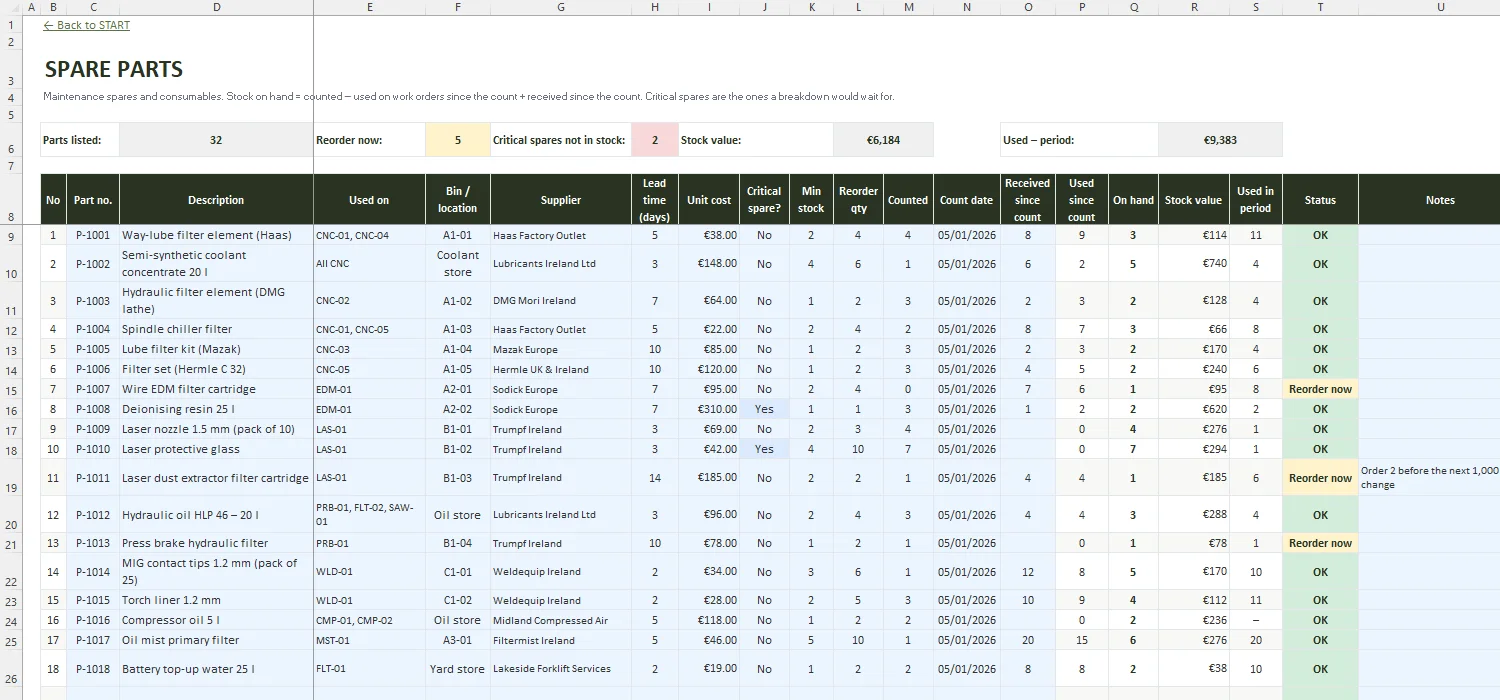
Up to 150 spares and consumables: used on, bin, supplier, lead time, unit cost, critical spare, minimum stock – stock on hand from the count, receipts and the work orders, value and reorder status.
Per asset for the KPI period: PM jobs done and on time, breakdowns, breakdown and planned downtime, MTBF, MTTR, availability, PM and corrective cost, downtime cost, reactive share and cost rank.
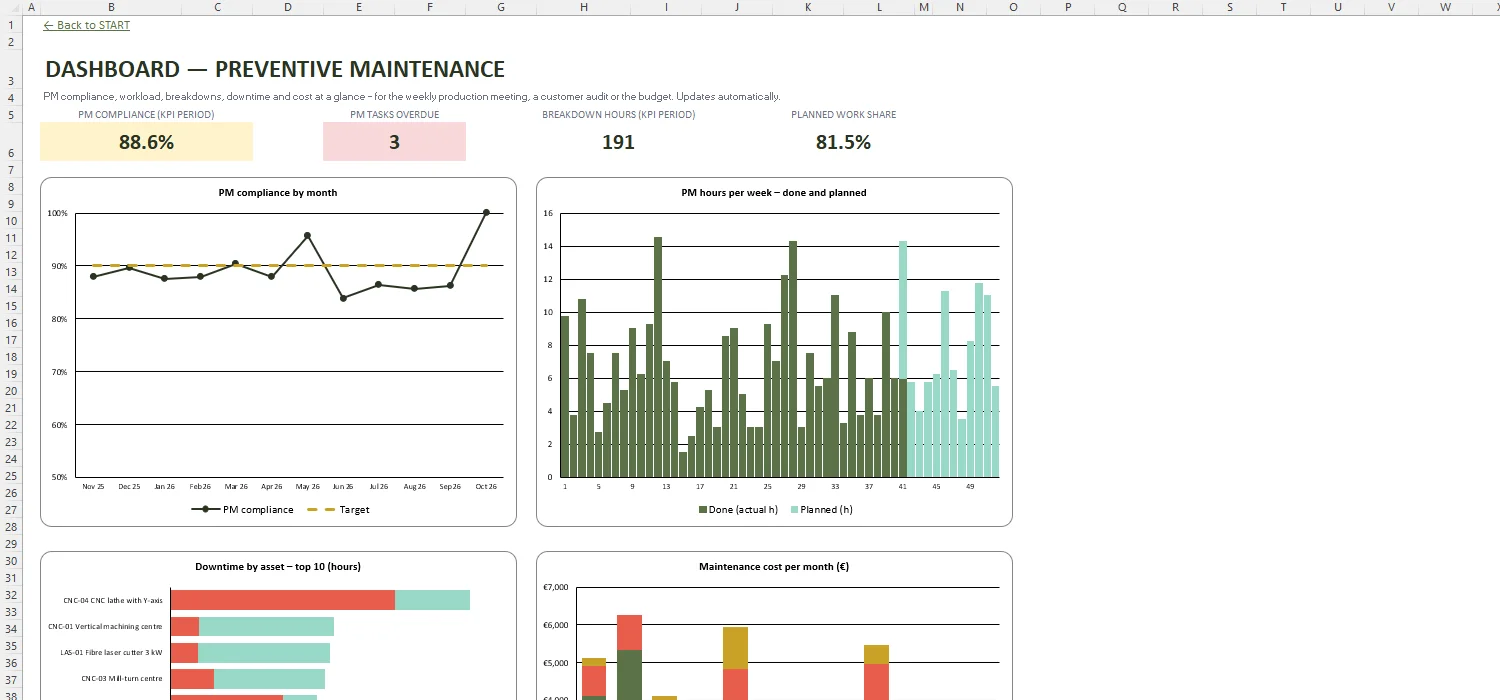
PM compliance, overdue tasks, breakdown hours and planned work share, with charts of PM compliance by month, PM hours per week, downtime by asset and maintenance cost per month.
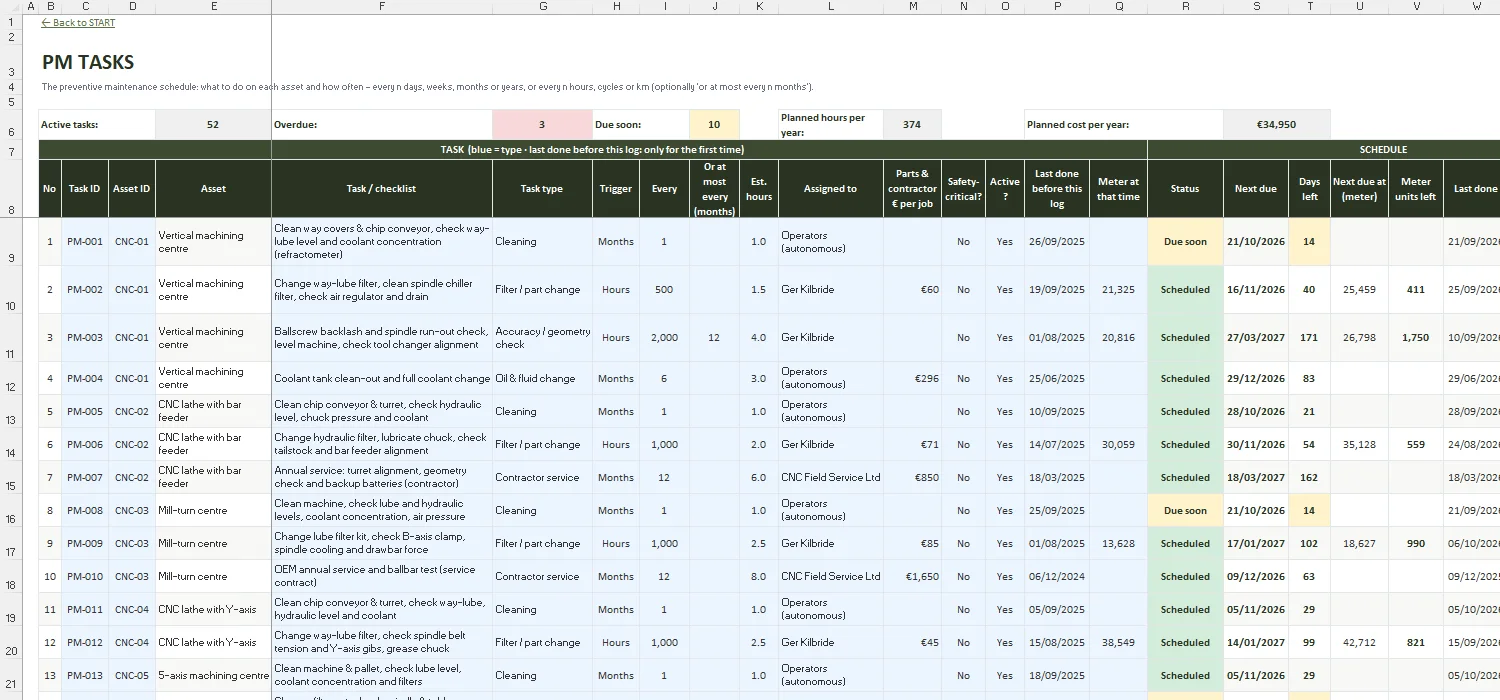
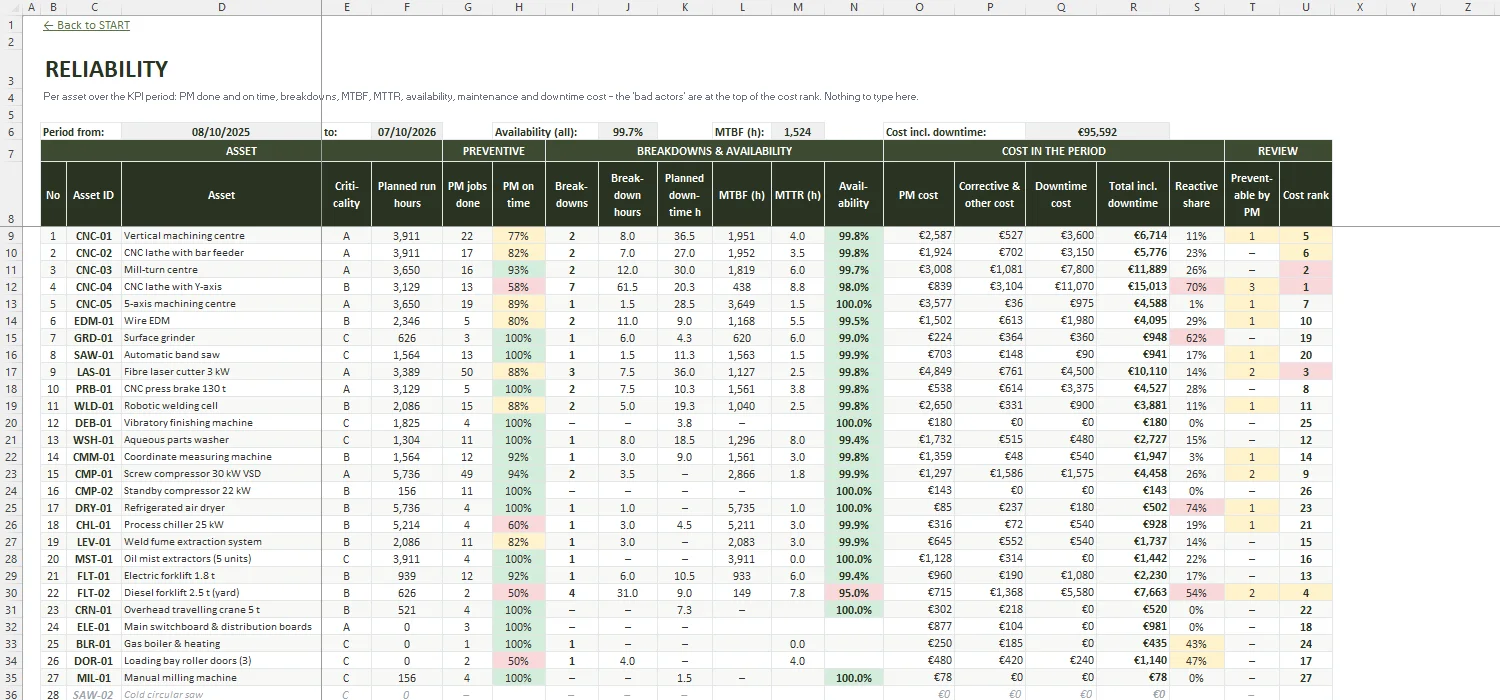
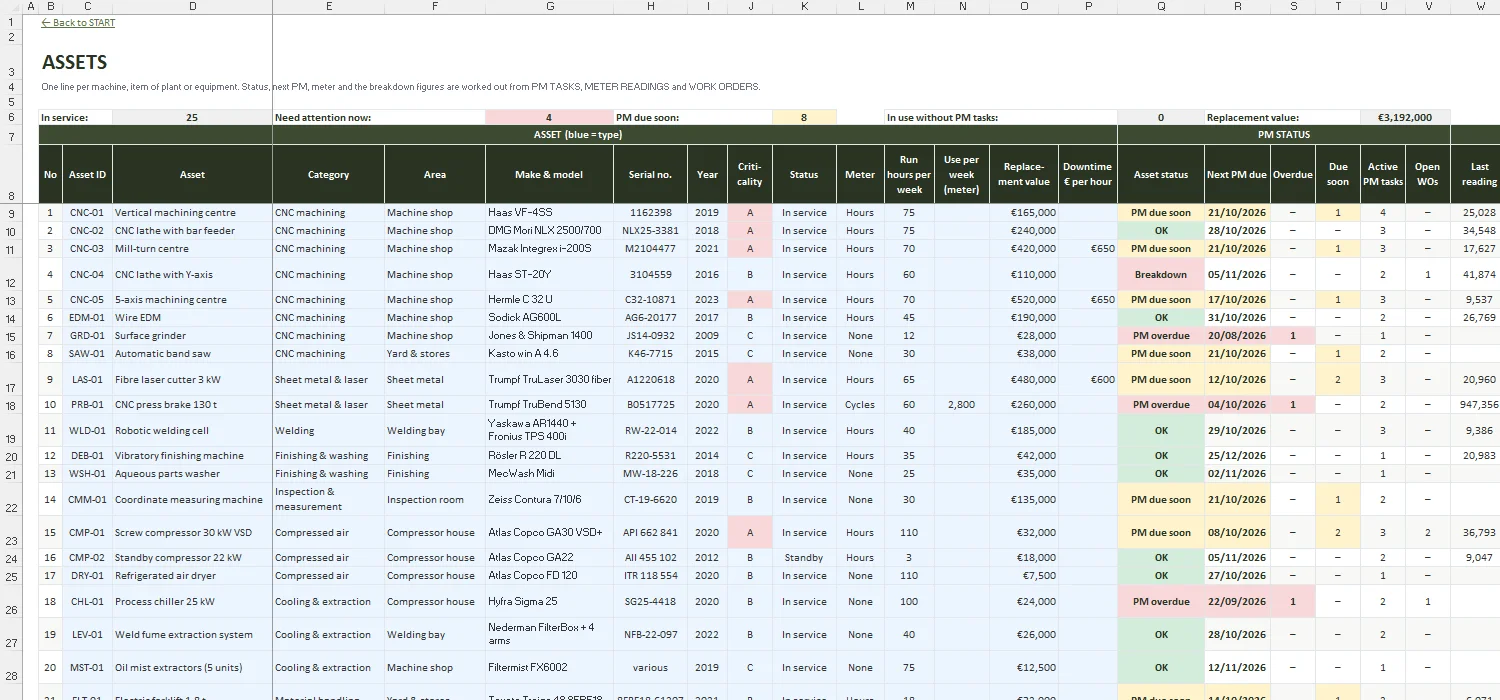
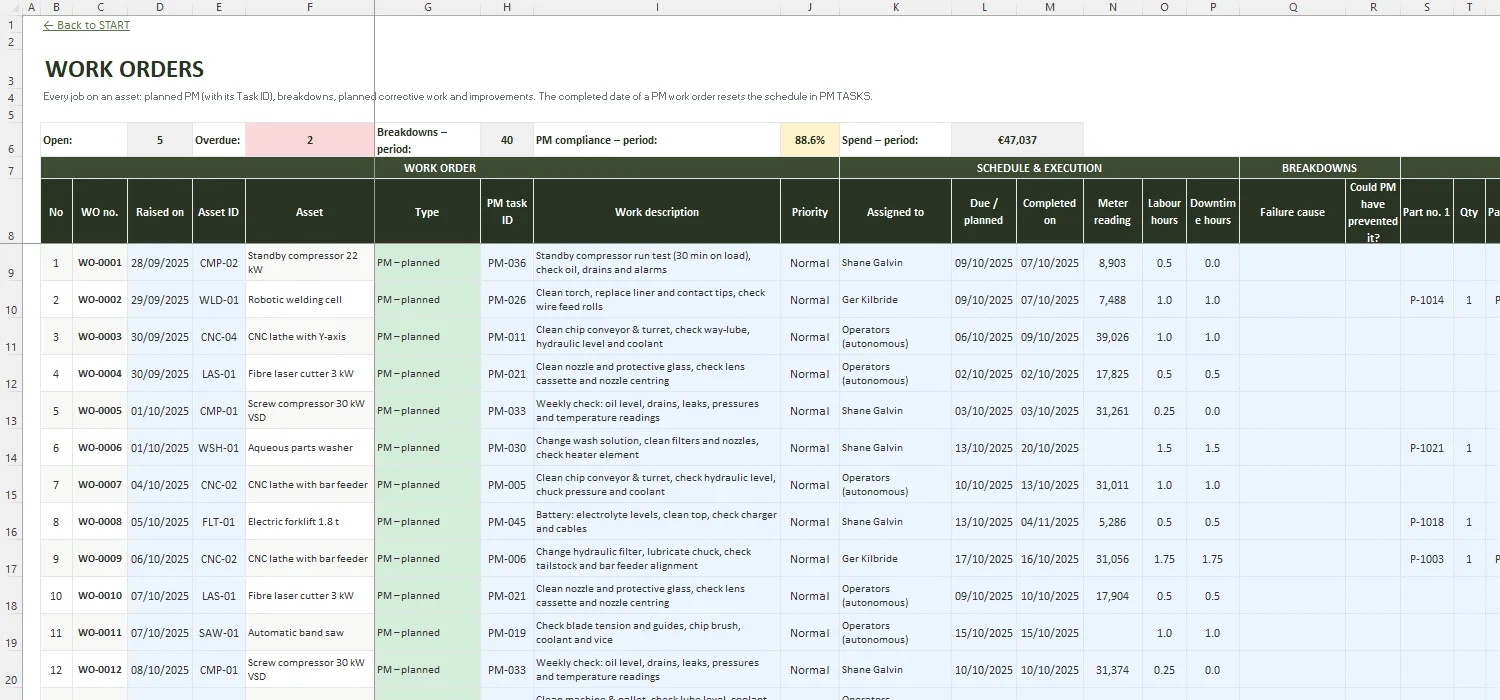
List the assets first, then the tasks for each one with an interval – every month, every 6 months or every 500 running hours – and the date (or meter reading) each was last done. The next due date is the last done date plus the interval. In this workbook you type the tasks once in PM TASKS; each completed work order resets the date, and the 52-week plan and the status columns update themselves.
Start from the manufacturer's manual and your own breakdown history: what to check, clean, lubricate, adjust or replace, how often, who does it, how long it takes and which parts it needs. Put the critical machines first and add the inspections a competent person has to carry out. The example data shows 53 typical tasks for CNC machines, a laser, a press brake, compressors, chillers, extraction, forklifts and building services.
Yes. Set the trigger to Hours, Cycles or km and enter weekly meter readings – the workbook works out the use per day and forecasts the due date. Add 'or at most every n months' for tasks such as a compressor service at 4,000 hours or 12 months, whichever comes first.
Yes – the 52-WEEK PLAN sheet shows every task by week for the plan year you choose: ✓ for jobs done (taken from the work orders), ● for jobs planned and ! for jobs overdue, with the jobs and planned hours per week. It is calculated, so you do not have to fill in the grid by hand.
PM compliance = PM work orders completed within the on-time window ÷ PM work orders that fell due in the period. The window depends on the asset's criticality (3, 7 or 14 days after the due date in the example, all editable). The dashboard shows it month by month against your target.
No spreadsheet can do that. It helps you plan maintenance and keep dated records of what was done, which is how most firms show that work equipment is maintained. Statutory inspections and examinations by a competent person – for example of lifting equipment or pressure systems – are recorded in their own registers; here they appear only as reminders.
Budget, levies, arrears & sinking fund for OMCs
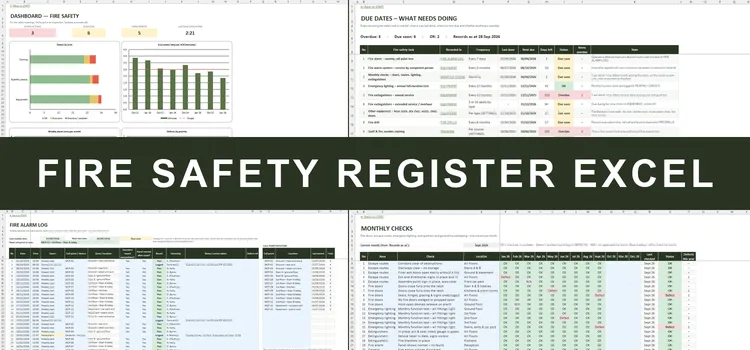
Fire safety log book with due-date alerts for Irish buildings
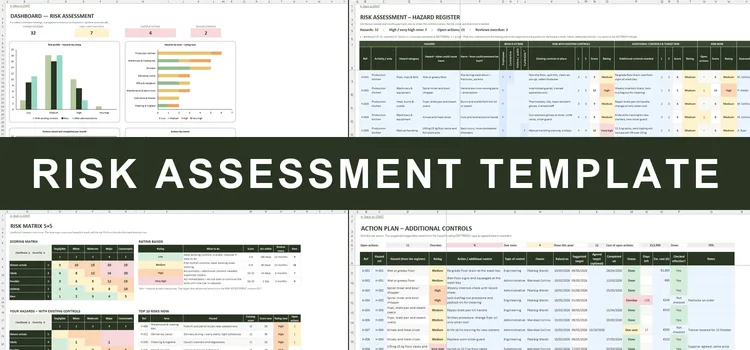
Hazard register, 5×5 risk matrix, action plan & Safety Statement checklist
Planned preventive maintenance (PPM) for machines, plant and equipment – PM tasks by date or by hours and cycles, 52-week plan, work orders, spare parts, MTBF and MTTR · €69
A preventive maintenance schedule template for machines, plant and equipment: a planned preventative maintenance (PPM) schedule with tasks by date or by running hours, cycles or km, an equipment maintenance log of every work order, and a 52-week preventive maintenance schedule that fills itself from the jobs you close.
Use it as a machine maintenance schedule template for a workshop or factory, a maintenance tracker in Excel with PM compliance, breakdowns and downtime, or a simple maintenance schedule template with yearly, monthly and weekly tasks – plus spare parts stock, MTBF, MTTR and availability per asset.